Chinese Astrology Year of the Rat: Why Are You So Sensitive to Change—Yet Find It So Hard to Truly Relax?
When you look up the Chinese Astrology Year of the Rat, you’re usually not looking for a generic line like “Rat people are clever and quick-witted.” What you’re really trying to confirm is a specific, exhausting experience: you notice shifts early, you catch details fast, and you anticipate risk before other people even realize something has changed. Outsiders may read you as calm and rational—but inside, you often feel tense, accelerated, and unable to fully stop. This quiet tension is one of the most common experiences associated with the chinese astrology year of the Rat.
The Year of the Rat corresponds to the Earthly Branch Zi (子). In Chinese metaphysics, Zi is commonly understood through Water imagery: alert, responsive, information-dense, and quick to initiate. Your advantage is early signal detection, efficient danger avoidance, and finding opportunity inside uncertainty. Your cost is that alertness becomes your default operating mode—staying “on standby” even when nothing is happening—so real rest becomes difficult. This dynamic sits at the core of how the chinese astrology year of the Rat shapes perception and long-term stress patterns.
Detect signals early, read timing fast, and build safety through preparation and information.
Alertness turns into a permanent readiness state; rest gets postponed until certainty feels “complete.”
Very often, your exhaustion does not come from the work itself. It comes from a deeper rule running in the background: you do not easily permit yourself to make mistakes.
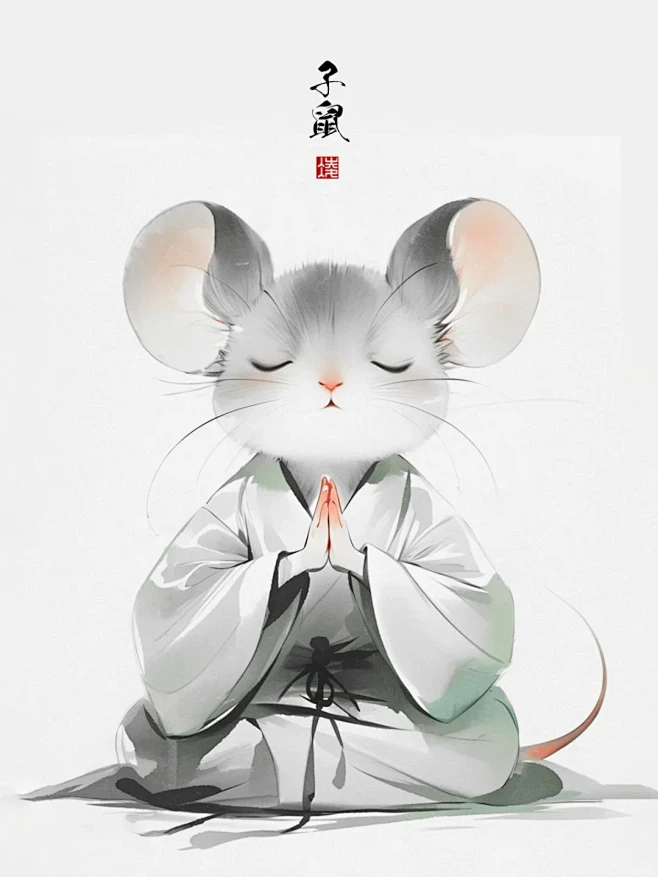
What the Rat Represents: Not a Label, but a “Rhythm Foundation”
In the Twelve Zodiac Animal system, the Rat aligns with Zi. Practically speaking, Zi describes a rhythm that behaves like Water: it senses movement quickly, responds before others fully register the change, looks for the safest path forward, and keeps an exit available—just in case. This rhythm has clear strengths: you remain steady when others get chaotic, you read timing and risk well, and you build advantage through information and preparation. This is why the chinese astrology year of the Rat is better understood as a rhythm foundation rather than a simple personality label.
But there is a trade-off. When “securing safety” becomes the baseline requirement for living, you can slip into chronic, low-level, on-call alertness. You may think you are preparing, but you are also quietly consuming your own energy.
Why the Rat Is Seen as “the Beginning”: Not the Fastest, but the Earliest Starter
The Rat is traditionally placed first to represent initiation. In rhythm terms, this does not mean reckless speed. It means early activation: you check the atmosphere first, read the wind first, map the route and the retreat first—only then do you move. That’s why Rat energy often shows up as high sensitivity to shifts in tone, pace, and mood, automatic risk scanning before decisions, preference for control over thrill, and a calm surface with fast internal processing. These patterns frequently appear in real-life narratives tied to the chinese astrology year of the Rat.
In teams and relationships, this can create a quiet assignment: “You notice details best—so you handle the checks.” What others call reliability, you may experience as “I have to watch this again.” And the price often shows up at night: restless sleep and difficulty switching off.
The Real Reason Sensitivity Becomes Exhausting
Rat energy is designed for risk awareness and opportunity detection. The problem begins when alertness becomes a permanent readiness state: you treat “no mistakes allowed” as the condition for safety, and you postpone rest until certainty feels complete. This is not about “overthinking.” It’s closer to having strong perception of uncertainty—paired with a compressed recovery mechanism. This hidden cost is one of the least discussed aspects of the chinese astrology year of the Rat.
You do not let go because you cannot. You do not let go because you do not feel safe enough to.
Three Common Scenarios
Work
You re-check, then re-check again—especially as deadlines approach. You delay sending not because you are lazy, but because you want uncertainty to drop to zero. Often you submit late, only after your nervous system has been running at full speed for hours.
Relationships
You care, but you hold part of yourself back to observe first. When signals are unclear—mixed messages, shifting closeness, or unpredictable behavior—you protect yourself by investing less.
Your inner system
At night, you replay conversations and decisions: “Did I say something wrong?” “Did I miss something?” “What if this becomes a problem later?” Some people also notice lighter sleep, chest pressure, neck/shoulder tension, appetite disruption, or a mind that won’t quiet down.
The pattern is consistent: high information intake, insufficient recovery.
Career: You Win Through Information and Rhythm—Not Through High-Stakes Gambling
People with a strong Rat rhythm are not afraid of hard work. You simply do not thrive in paths that require one final “all-in” push with no exit. You do better in work that rewards timing and judgment, testing and iteration, steady accumulation and optimization, and risk-managed execution.
What often holds you back is not ability, but your start threshold: you want more certainty before beginning—yet certainty rarely arrives in full. A more supportive strategy within the Rat framework is simple: start with a reversible pilot (low cost, easy to adjust), replace perfection with rhythm (run it first, refine it after), and replace endless imagination with evidence (small results build real security).
You are not “behind.” You are waiting for total certainty in a world that does not offer it.
Relationships: You Want Stability, Not Drama
Rat energy is often misunderstood as cold or distant. The more accurate truth is that you have a higher need for predictability and safety. When a relationship requires constant guessing, push-and-pull, or emotional volatility, your stepping back is not indifference—it is a protective mechanism. You do not lack love. You hesitate to entrust yourself to uncertainty.
More effective approaches for you are practical: state needs clearly and build shared expectations, make uncertainty negotiable rather than endless, and reduce prolonged speculation that burns your already sensitive system. Stability is not built by endurance. It is built by structure.
How to Truly Relax: Turn Alertness from “Standby Mode” into “Insight”
You do not need to force yourself to stop thinking. For you, relaxation is the ability to confirm: “If I make a mistake, there is still an exit.” For Rat energy, rest is not the absence of alertness—it is the presence of a reliable exit.
- Set a daily “stop-checking” time: after it, no more reviewing and re-evaluating.
- Move risk from mind to paper: write the top three worries and one reversible action for each.
- Stabilize one corner first: sleep, schedule, or workspace—then expand.
- Use body signals as switches: when tension appears, do a buffer action first (slow walk, warm water, stretching, calm breathing).
- Run a 7-day reality check: let small data replace endless mental simulations.
Why the Rat Year Alone Is Not Enough: The Real Map Is BaZi
Understanding the Chinese Astrology Year of the Rat is a strong entry point. It explains your habitual rhythm—how you react, how you scan, how you protect yourself. But what determines when you feel most anxious, which years drain you most, and which patterns repeat in work and relationships is your full BaZi (Four Pillars of Destiny) structure: where pressure points originate, where recovery channels are, and what turns alertness into insight rather than internal drain.
Your environment (Feng Shui) can also amplify or soften this pressure. Changes in home, workspace, or team dynamics can noticeably affect sleep and mood—not simply through willpower, but through structure and environment working together. What you need is not stronger willpower. It is a more accurate structure.
When to Stop “Pushing Through” and Start Seeing the Pattern Clearly
If two or more of the following are true, do not solve it by “enduring a little longer”: the same drain repeats for over a year (analysis paralysis, anxiety, difficulty relaxing), you get stuck at key moments because you want to be “a bit more sure,” your state changes dramatically with environment or relationship dynamics, or your body keeps sending alarms (sleep disruption, chest pressure, digestive strain, chronic tension, emotional numbness).
At this point, the key question is not effort. It is discernment: should you maintain alertness—or change your method, rhythm, and exit strategy?
Rat Years and Date Boundary Reminder
Common Rat Years (12-year cycle): 2008, 1996, 1984, 1972, 1960, 1948, 1936, 1924 (and so on, every 12 years). Important note: the zodiac-year boundary may be defined by either Chinese New Year (Lunar New Year) or the solar term Start of Spring (Li Chun), depending on the system used. If you were born in late January or early February, you may be on the cusp and should verify using a more precise calculation method.
Conclusion: The Rat Year Is Not Fate—It Is Sensitivity That Needs Recovery
The Year of the Rat does not conclude that you are “destined to be tired.” It offers a reminder: your sensitivity and early detection are real strengths, but strength without recovery becomes depletion. If you have been living solely on alertness, the issue is not your gifts. It is that you have not yet built a structure that feels safe enough—one that allows room for adjustment, exit, and genuine rest.
Seeing your pattern clearly once often does more to restore steady calm than continuing to push through on willpower alone.
Chinese Astrology Year of the Rat · Year of the Rat meaning · Zi (子) Earthly Branch · Rat in Chinese metaphysics · Rat rhythm foundation · Rat Water imagery · BaZi Four Pillars of Destiny · Li Chun vs Chinese New Year boundary