Chinese Astrology Year of the Snake: Why Do You Seem Calm and In Control, Yet Feel More Exhausted, Sensitive, and Struggle to Truly Relax?
When you look up the Chinese Astrology Year of the Snake, you are probably not searching for a simple line like “Snake people are intelligent.” You are looking for confirmation of a specific, tangible experience:
You do not wear your emotions on your sleeve. You prefer to observe, analyze, and fully understand a situation before you commit. People perceive you as composed, rational, and strategic. But inside, you increasingly feel strained, guarded, drained, and perpetually “on.” Your mind will not quiet down. Security feels like something you must earn through control. You are capable—highly capable—yet genuine relaxation stays out of reach.
It is not that you are cold.
It is that you are always on patrol.
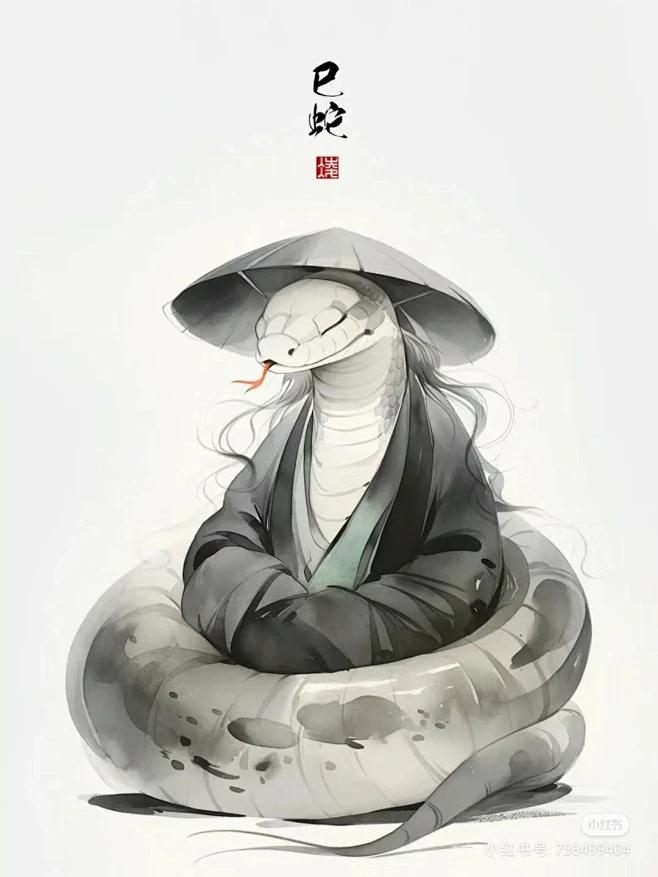
The Year of the Snake corresponds to the Earthly Branch Si (巳), often understood through the imagery of contained fire: not outwardly dramatic, yet continuously generating heat; not dominating the room, yet always observing—in the Chinese Astrology Year of the Snake.
Deep insight, accurate judgment, seeing essentials fast, and avoiding unnecessary risk.
Insight can become hyper-vigilance—control becomes security, and rest becomes shallow and hard to switch on.
Often, your fatigue does not come from the tasks themselves. It comes from never allowing yourself to cool the internal heat—to truly power down. This is the core challenge illuminated by the Chinese Astrology Year of the Snake.
What the Snake Represents: An Insight Foundation
In the Twelve Zodiac Animal system, the Snake (Si) is not fundamentally about danger. Its core rhythm is internal processing: not outwardly explosive, yet continuously working; not noisy, yet consistently watchful—one of the defining rhythms of the Chinese Astrology Year of the Snake.
Metaphorically, Si can be understood as a lamp burning indoors: it illuminates sharply, distills information into clarity, and turns complexity into precise judgment. But if that lamp burns too long without dimming, the system becomes overheated—sleep turns light, recovery becomes thin, and you start living in a state of constant inner friction.
In essence, Snake power lies in seeing through. Snake vulnerability lies in applying mental force too early—you rehearse the worst-case scenario long before action is required. Recognizing this pattern is the first step toward managing it.
This rhythm gives you clear advantages:
- Keen observation and precise judgment: identifying the core issue quickly
- Strategic action: not quick to commit, but highly effective when you do
- Navigating complexity: sensing motives, risks, and hidden variables in intricate dynamics
But there is a shadow side. When “seeing everything clearly” becomes your only source of security, you enter hyper-vigilance: outwardly calm, inwardly simmering. The more you chase stability, the harder it is to sleep. The more you chase control, the harder it is to unwind.
You do not overthink. You stay on guard.
The Snake Instinct: Observe First Because “Going With the Flow” Feels Unsafe
Snake rhythm is built on caution. When faced with uncertainty, the instinct is not impulsiveness—it is to first see through: Is this person reliable? Where are the risks? Who pays the cost if this goes wrong? This pattern becomes especially visible in the Chinese Astrology Year of the Snake.
Common patterns include: hesitating to state a position until enough information is gathered; disliking being read too easily, and resisting loss of control; becoming quieter and more internally intense at critical moments; keeping emotions contained while the body stays tense.
This can make others label you as cold, distant, or overly rational. But you know it is not indifference. It is risk-awareness.
You do not lack emotion. You fear handing it over to an environment that feels uncertain.
Career: You Are a Natural Strategist—But You Risk Burning Out Through Constant Monitoring
Snake rhythm excels at research, strategy, negotiation, technical work, risk management, and any role requiring sharp judgment. You can distill complex situations into clear conclusions—exactly the kind of strength emphasized in the Chinese Astrology Year of the Snake.
The danger is not caution. It is living like the last line of defense—24/7. When you do not trust delegation, you monitor details personally. The more you monitor, the more exhausted you become. The more exhausted you become, the less you trust others. It becomes a self-reinforcing loop.
A crucial insight: turn insight into rules, and control into systems. Let judgment live inside mechanisms, not inside your nerves.
Supportive strategies within the Snake framework
- Define acceptable risk: do not wait for zero risk; proceed when risk is manageable.
- Turn key points into checklists: monitor only critical variables, not everything.
- Establish shutdown periods: set a daily time when no reviewing, strategizing, or re-checking happens.
- Use evidence over mental simulation: validate with small experiments and data, not infinite scenario loops.
- Practice not seeing more—but letting go more.
Relationships: You Need Verifiable Security, Not Deeper Probing
In relationships, Snake sensitivity is powerful: you notice subtext, shifts in tone, inconsistencies, and hidden motives. The risk is using that sensitivity as defense—silence as armor and withdrawal as a trump card.
It protects you short-term. It can isolate you long-term.
The key to relational stability is not how accurately you read people. It is whether you can name your unease with clarity: what boundaries do you need? what behaviors trigger insecurity? what agreements would make you feel stable?
More effective approaches
- Less probing, more clarity: say what you need, not what you suspect.
- Shift from “I am observing you” to “I need these specific behaviors and agreements.”
- Build security through verifiable commitments, not endless watching.
You do not need to become better at reading people. You need to become better at establishing mutual rules.
How to Truly Relax: Turning Insight from Vigilance into Freedom
You do not need to force yourself to be “less sensitive.” A more realistic approach is to give your insight an outlet—so it does not stay as internal heat in the Chinese Astrology Year of the Snake.
Practical methods
- Give insight a landing point: after you see through something, convert it into a decision or a small action—or it becomes internal drain.
- Move worry from mind to paper: write “Top 3 worries + one reversible action” for each, so your system knows there is an exit.
- Use the body as a cooling switch: slow walk, warm water, stretching, breathing—cool down first, then decide.
- Transfer control to structure: let processes, checklists, and rules do the watching, not your nerves.
- Practice safe enough: relaxation is not carelessness; it is permission to stop calculating every last variable.
What you need is not to be smarter. It is to be better at stopping.
Why the Snake Year Alone Is Not Enough: The Real Map Is BaZi
Understanding Snake rhythm is a powerful first step. It explains your insight, caution, and discomfort with uncertainty. But it cannot pinpoint when you are most prone to overheating, which relationship dynamics trigger your defensiveness, or where your real recovery point is.
For that, you need the full map: BaZi (Four Pillars of Destiny). This system reveals your personal structure: what truly makes you feel secure; when you are most prone to hyper-vigilance; what conditions allow genuine recovery; what patterns repeatedly trigger “on-alert mode.”
Your environment (Feng Shui) can also intensify internal heat. A bedroom or workspace that disrupts rest or creates constant interruption can keep you alert and controlling—not because you are weak, but because the environment keeps adding fuel.
What you need is not more endurance. It is the right recovery structure.
When to Seek Deeper Clarity
If two or more of the following are true, it is time to look beyond “trying to see more clearly”: chronic light sleep, frequent waking, and a mind that will not quiet; increasing distrust and an increasing need for control; the same anxiety cycle repeating for over a year; persistent body signals—wired restlessness, digestion issues, tension, exhaustion paired with inability to stop.
At this point, the issue is not intelligence. It is precision: what is your vigilance truly protecting, what must be released, and what method helps you recover for real?
Snake Years and Date Boundary Reminder
Common Snake Years (12-year cycle): 2025, 2013, 2001, 1989, 1977, 1965, 1953, 1941, 1929 (and so on, every 12 years).
Important note: the zodiac-year boundary may be defined by either Chinese New Year (Lunar New Year) or the solar term Start of Spring (Li Chun), depending on the system used. If you were born in late January or early February, you may be on the cusp and should verify using a more precise calculation method.
Conclusion: The Liberation of the Snake Year
The Year of the Snake does not condemn you to a life of perpetual defense. It offers a powerful reflection: your capacity for deep insight and risk-awareness is a real gift. Mastery is learning to cool the internal heat, power down, and trust in structure. That is the deeper invitation of the Chinese Astrology Year of the Snake.
When you realize your sharp perception has been paired with growing exhaustion, choosing to understand your deeper energetic makeup is not failure. It is the path to liberation—transforming insight from draining vigilance into grounded self-awareness and, ultimately, real peace.
Chinese Astrology Year of the Snake · Year of the Snake meaning · Si (巳) Earthly Branch · Snake in Chinese metaphysics · contained fire imagery · hyper-vigilance and control · shutdown and recovery structure · BaZi Four Pillars of Destiny · Li Chun vs Chinese New Year boundary