Chinese Astrology Year of the Dragon: Why Are You Built to Resist Mediocrity and Aim Higher—Yet More Prone to Pressure Overload and Losing Control Under Stress?
When you look up the Chinese Astrology Year of the Dragon, you are probably not searching for a simple line like “Dragon people are powerful.” You are looking for confirmation of a specific, tangible experience:
You set big goals, hold high standards, and project strong presence. People see you as ambitious and visionary. But inside, you increasingly feel pressed, rushed, strained, and burned out. You want to control the whole picture, yet become more anxious at critical moments. What others perceive as confidence, you experience as relentless tension, pressure overload, and sometimes sudden emotional blow-ups.
The issue is not capability.
It is that you keep lifting yourself too high for too long.
The Year of the Dragon corresponds to the Earthly Branch Chen (辰). In Chinese metaphysics, Chen is often understood through the imagery of gathering, forming, and elevating—pulling resources together to shape something substantial and significant.
You set ambitious targets, integrate resources, and systematize complex endeavors.
You can mistake height for safety and control for security—pressure inflates until you can’t truly come down.
Often, your exhaustion does not come from the scale of the tasks. It comes from not allowing yourself to land. This is the core tension revealed by the Chinese Astrology Year of the Dragon.
What the Dragon Represents: A Lifting and Forming Foundation
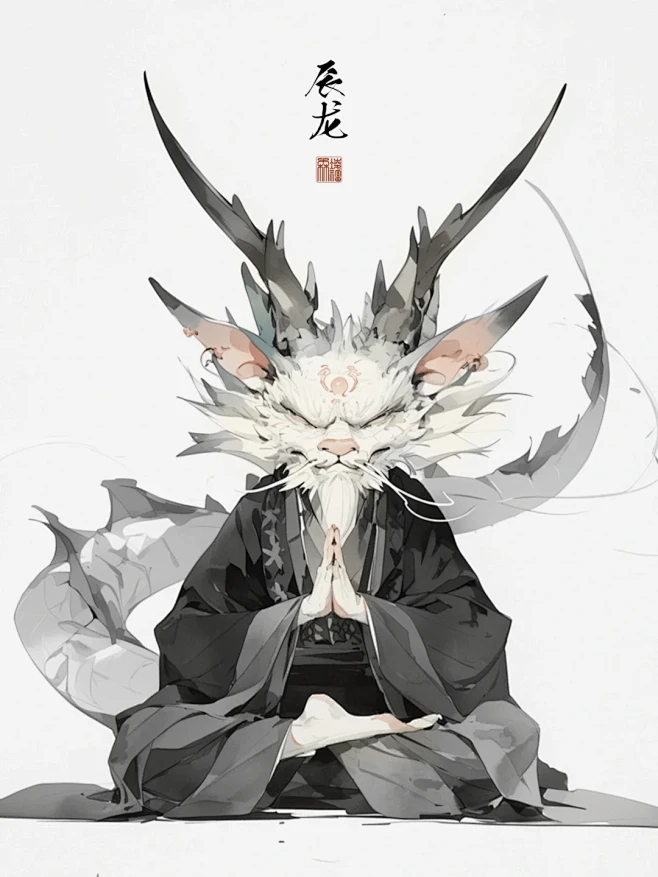
In the Twelve Zodiac Animal system, the Dragon aligns with Chen, and its meaning is not primarily about myth. Chen describes a rhythm of formation—a force that gathers scattered elements, consolidates them, and shapes them into tangible reality. This is the deeper lens behind the Chinese Astrology Year of the Dragon.
In traditional metaphysics, Chen is also often described as an “earth storage” quality—excellent at accumulation and containment, but more prone to swelling pressure when overfilled. In plain terms: the more you hold, the more you compress; and if you never release, the internal load keeps building.
In essence, Chen energy is not constant charging forward. It is building things that feel significant. And its biggest risk is this: the form becomes too large, the pressure becomes too full, and the system becomes hard to contain.
This rhythm gives you clear advantages:
- Visionary drive: the courage to set high targets and carry major responsibility
- Integrative ability: the skill to consolidate resources into one coherent endeavor
- Impact orientation: focusing not just on completion, but on influence and legacy
But there is a shadow side. When you repeatedly place yourself in a position where you must be bigger, stronger, and more impressive, you enter a state of pressure inflation: the bigger the mission, the tighter you become; the more you demand a flawless win, the harder it is to relax.
You may feel like you are becoming stronger. You may also be lifting yourself into breathlessness.
The Dragon Drive: A Deep Resistance to “Smallness”
In the Chinese Astrology Year of the Dragon, Dragon rhythm rarely feels satisfied with “good enough.” You care intensely about whether something is meaningful, worthwhile, and substantial.
Common patterns include: once committed, aiming for the best and the biggest outcome; disliking being undervalued—the more doubted you are, the more you want to prove yourself; preferring overall command, and finding it difficult to delegate fully; appearing calm, while internal pressure steadily builds.
This often puts you in roles like: the person carrying the critical mission, the final decision-maker. Others see you as the backbone. What you feel is something else: “If I relax, everything falls apart.”
Your deepest fear is not simply failure. It is the fear of falling from the height you have built.
Career: You Excel as an Integrator and Stabilizer—But Risk Carrying Everything Yourself
Dragon rhythm is strongest at: setting direction, consolidating resources, holding the big picture, and building systems. You can take complex things and produce a formed result—one of the most recognizable strengths of the Chinese Astrology Year of the Dragon.
The danger is not ambition. It is turning “being central” into “doing everything.” When you do not trust others to meet your standards, you micromanage; pressure inflates, and the risk is that you collapse under the load first.
A crucial insight: Dragon success is not created by being harder. It is created by delegation and structure. Chen energy wins through establishing form—set the framework, define the rules, install the system, then push forward. Relying on raw willpower alone means the bigger the form becomes, the more fragile it is.
Supportive strategy within the Dragon framework
- Layer your goals: an impact goal (big), a delivery goal (settle-able), and weekly checkpoints (actionable)
- Keep strategy, delegate execution: you hold vision and key decisions; processes and owners handle routine delivery
- Install pressure release valves: stop at set times, hand off at defined lines, lighten load at early risk signals
- Build sustainability into elevation: every rise in intensity must be followed by grounded formation—rules, templates, systems
Your goal is not simply to do bigger things. It is to make the big picture sustainable.
Relationships: You Need Safe Space for Vulnerability, Not Tighter Control
In relationships, Dragon rhythm often values commitment and dignity, and dislikes being looked down on. Under stress, you may use strength to hold things together—using “I can handle it” to cover “I need support too.”
But long-term stability is not built by one person holding everything up. If you cannot show vulnerability, you may feel more like a responsible party than someone who can be supported and loved.
You do not lack the need for closeness. You fear being seen as needy.
More effective approaches
- Name the pressure, and state needs directly
- Replace “I can handle it” with “I get tired too”
- Let the other person carry part of the weight, not just watch you carry it
This is not losing face. It is giving the relationship a chance to connect with the real you.
How to Truly Land: Make Elevation Accountable and Pressure Distributed
You do not need to stop thinking big. You need to make height livable.
Practical methods
- Pair every big goal with a small settlement: deliver a tangible result every 7–14 days so your system sees progress, not perpetual strain.
- Create a delegation map: what must you decide? what must others own? what can you release?
- Shift dignity to structure: standards, processes, and mechanisms become your true foundation.
- Create a landing ritual: sleep, movement, quiet time, recovery—costs of preventing burnout, not rewards.
- Treat urgency as a signal: when you feel rushed, reactive, or short-tempered, it’s time to downshift.
Practice not being stronger, but being better at releasing pressure.
Why the Dragon Year Alone Is Not Enough: The Real Map Is BaZi
Understanding Dragon rhythm is a strong first step. It explains your instinct toward height, scale, and formed results. But it cannot pinpoint when pressure peaks for you, or what you need to turn elevation into something sustainable—especially if the Chinese Astrology Year of the Dragon description fits you strongly.
For that, you need the full map: BaZi (Four Pillars of Destiny). This system clarifies your personal structure: what supports your ascent, what allows you to land, when you must delegate, and what patterns make you more reactive under stress.
Your environment (Feng Shui) can also amplify pressure inflation. A space that keeps you chronically tense or disrupts real rest can intensify control needs, shorten patience, and increase exhaustion.
What you need is not pushing harder. It is the right structure.
When to Seek Deeper Clarity
If two or more of the following patterns are true, it is time to look beyond “toughing it out”: achievements grow, but happiness shrinks; you become more reactive, or more prone to snapping at critical moments; the same pressure cycle repeats for over a year; your body keeps sending signals—sleep disruption, chest tightness, chronic neck and shoulder tension, internal heat, emotional volatility.
At this point, the issue is not a lack of strength. It is precision: where should you continue elevating, and where must you come down to earth? What must be delegated? What pressure must be released so the mission can thrive—and you can live well?
Dragon Years and Date Boundary Reminder
Common Dragon Years (12-year cycle): 2024, 2012, 2000, 1988, 1976, 1964, 1952, 1940, 1928 (and so on, every 12 years).
If you're verifying the Chinese Astrology Year of the Dragon for a late January or early February birthday, pay attention to the boundary rules below. Important note: the zodiac-year boundary may be defined by either Chinese New Year (Lunar New Year) or the solar term Start of Spring (Li Chun), depending on the system used. If you were born in late January or early February, you may be on the cusp and should verify using a more precise calculation method.
Conclusion: The Wisdom of the Dragon Year
The Chinese Astrology Year of the Dragon does not sentence you to relentless burden-bearing. It offers a powerful reflection: your capacity to elevate, integrate, and form is a real gift. Mastery is learning to land, delegate, and release pressure.
When you recognize that your “strength” has been paired with chronic tension, choosing to understand your deeper structure is not weakness. It is the path to sustainable power—turning your drive for height from exhausting strain into a foundation for steady, lasting, truly impressive achievement.
Chinese Astrology Year of the Dragon · Year of the Dragon meaning · Chen (辰) Earthly Branch · Dragon in Chinese metaphysics · Chen earth storage imagery · formation and elevation rhythm · pressure inflation · delegation and structure · BaZi Four Pillars of Destiny · Li Chun vs Chinese New Year boundary