Chinese Astrology Year of the Rabbit: Why Are You Always “Avoiding Trouble,” Yet Feeling More Wronged and Exhausted?
When you look up the Chinese Astrology Year of the Rabbit, you are probably not searching for a simple line like “Rabbit people are gentle and kind.” You are looking for confirmation of a familiar, hard-to-explain state: you are considerate, diplomatic, and skilled at keeping things harmonious—people see you as easygoing and pleasant. But inside, you increasingly feel stifled, drained, and always retreating. You let things slide when they bother you, swallow words you want to say, and avoid conflict at all costs. The surface stays calm, while inside you accumulate a sense of being wronged—until you feel tired, resentful, and quietly disconnected.
It is not that you lack a temper. It is that you are constantly suppressing yourself. This is a core paradox revealed by the Chinese Astrology Year of the Rabbit, and also one of the most recognizable emotional patterns within the Chinese Astrology Year of the Rabbit, especially for those who repeatedly find themselves living out the Chinese Astrology Year of the Rabbit experience.
The Year of the Rabbit corresponds to the Earthly Branch Mao (卯). In Chinese metaphysics, Mao is associated with Wood, best understood through the imagery of soft wood and gentle growth: buffering tension, cooling conflict, avoiding direct confrontation, and using flexibility to soften rigidity. Your strength is that you read social cues, navigate relationships, soften sharp edges, and de-escalate conflict.
Your cost is that when you carry the burden of “keeping the peace” alone, accommodation becomes your default tool— and over time, that creates long-term self-silencing and internal exhaustion, a classic tension described in the Chinese Astrology Year of the Rabbit, and frequently observed across the Chinese Astrology Year of the Rabbit life pattern.
Read cues fast, buffer tension, de-escalate conflict, and keep connection workable.
Harmony-making becomes a solo burden; self-silencing slowly turns into resentment and fatigue.
Often, your fatigue does not come from the people around you. It comes from the repeated act of muting your own voice.
What the Rabbit Represents: A Buffering Foundation
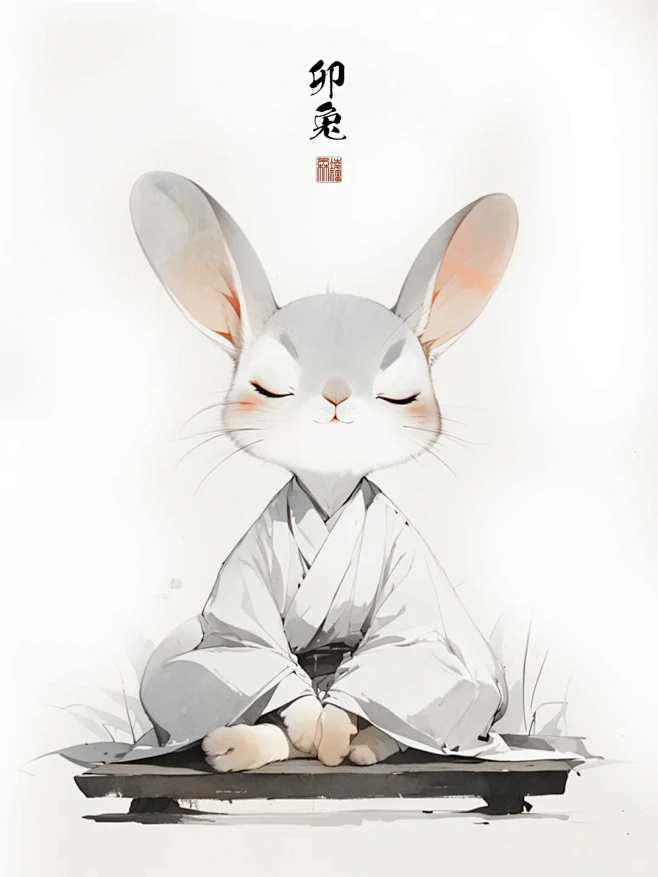
In the Twelve Zodiac Animal system, the Rabbit aligns with Mao, a rhythm of gentle, persistent growth. Its nature is not to seize or confront, but to adapt, negotiate, and preserve connection. This buffering rhythm is central to understanding the Chinese Astrology Year of the Rabbit.
This rhythm gives you clear advantages: social intelligence (you sense emotion and boundaries quickly, and defuse tension early), diplomatic skill (you turn sharp conflict into something discussable and manageable), and trust-building (you create safety through empathy, steadiness, and careful attention).
But the same strength has a shadow side. The greatest risk for soft Wood is not slow growth—it is being worn down by harmony-making. When “avoiding trouble” becomes your primary goal, you can slip into chronic suppression: outwardly everything looks fine, inwardly you feel less and less like yourself. You may believe you are maintaining stability. You may also be quietly eroding your own foundation.
The Rabbit’s Instinct: Protect the Atmosphere First
Rabbit energy naturally buffers. Under pressure, your first impulse is rarely direct confrontation. It is preventing the situation from becoming ugly, awkward, or relationship-breaking. You smooth things over, make excuses for others, and keep the room calm.
Common patterns include: choosing detours over direct paths, endurance over argument; fearing relationship rupture more than personal unfairness; yielding “a little” so the situation can pass; internalizing emotion instead of expressing it—creating a slow sinking feeling.
This often places you in the role of the mediator, the peacekeeper, the “easygoing one.” Others appreciate your gentleness. You may carry a different inner reality: once again, you are the one swallowing discomfort to keep the peace. Your issue is not weakness. It is repeated absorption of emotional clutter for others.
The Exhaustion of Constant Gentleness: When Yielding Becomes Your Only Tool
Buffering is a powerful navigation skill. The problem begins when it becomes your only tool. Over time, you train yourself to stay quiet—until your unspoken needs and swallowed frustrations accumulate and transform into resentment, numbness, or emptiness.
The issue is not a lack of feelings. It is a lack of safe outlets for them.
Three Scenarios Where Rabbit Energy Struggles
Work
You avoid conflict and rarely speak up about unfair workloads. The result is predictable: more tasks come your way, not necessarily more recognition. Reliability becomes a quiet trap.
Relationships
To avoid arguments, you swallow dissatisfaction. This creates surface peace but inner bitterness. Over time, you may withdraw emotionally—quietly “freezing out” rather than exploding.
Family
You become the understanding one, constantly accommodating others. People grow used to your compliance, while your own wants remain unasked and unmet.
Some people also notice physical signals (not everyone): restless sleep, digestive strain, chest or shoulder tension, emotional dullness, and reduced capacity for joy. You may think you are simply managing. Your system may be signaling that suppression has become expensive.
Career: The Issue Is Not Ability—It Is Position and Boundaries
You excel in work built on trust, collaboration, refinement, and relationship maintenance—counseling, client success, design, user experience, community-building, coordination, and service roles that require diplomacy and detail.
The obstacle is often your default stance as the accommodator. You may downplay standards, defer to others’ rhythms, and hesitate to claim credit. A key insight: you can remain gentle and still be clear. The goal is not to become aggressive. It is to become defined.
Supportive strategy within the Rabbit framework: state standards early (do not wait until you are overwhelmed), set boundaries clearly (define what is acceptable and what is not), and make cooperation a conscious choice (help from willingness, not obligation). Your task is not to fight for the front. It is to hold your rightful ground firmly.
Relationships: Depth Is Real—But Hurt Becomes “Cost”
Rabbit energy values stability, loyalty, and long-term connection. You may trade personal comfort for relational peace. But when you repeatedly swallow your needs, gentleness turns into exhaustion—and kindness can curdle into a lingering sense of being wronged. In trying to preserve the relationship, you risk losing yourself inside it.
Stability is not produced by silent endurance. It is built through clear communication and mutually respected structure. More effective approaches: use direct language (“I need…” rather than hints or “I’m fine”), address issues before the freeze (speak while discomfort is still small), and treat clarity as protection, not confrontation. You do not need louder anger. You need earlier truth.
How to Find Ease: Let Gentleness Stay Powerful Without Becoming Drain
You do not need to force yourself to become tough. You need a supporting structure for your gentleness—so it remains sustainable.
- Practice light refusals: start by saying no to 10% of low-stakes requests.
- Build template phrases: “I understand your perspective, but I can’t commit to that.” / “For this to work, I need us to agree on…”
- Create emotional outlets: journal, talk with a trusted person, or use mediation—move feelings out of the body.
- Redefine stability: harmony is a shared responsibility, not a solo burden.
- Listen to body signals: chest tightness, stomach knots, or sleeplessness often point to one question: what am I suppressing right now?
Cultivate not greater endurance, but wiser self-protection.
Why the Rabbit Year Alone Is Not Enough: The Real Map Is BaZi
Understanding Rabbit rhythm is a strong first step. It explains your instinct for harmony and your discomfort with conflict. But it cannot pinpoint when you are most vulnerable to pressure, which dynamics trigger over-accommodation, or where your specific boundary challenges live.
For that, you need the full map: BaZi (Four Pillars of Destiny). This system clarifies your personal structure—when you must learn to say no, what relational patterns drain you, and what supports help you stay gentle without losing ground.
Your environment (Feng Shui) can also intensify this “pressure to yield.” A disruptive, tense, or unbalanced space can make retreat feel like the only option, increasing the drain. The path forward is not being more understanding. It is operating with clarity and structural support.
When to Seek Deeper Clarity
If two or more of the following patterns are true, it is time to look beyond “trying harder to be nice”: accommodating others does not improve outcomes and resentment keeps growing; the same grievance cycle repeats for over a year; you feel afraid to express needs because the peace feels fragile; your body keeps sending signals (sleep disruption, digestive strain, chronic tension, emotional numbness).
At this point, the issue is not virtue. It is precision: where should you stay flexible, and where must you stand firm? How do you build peace without self-silencing?
Rabbit Years and Date Boundary Reminder
Common Rabbit Years (12-year cycle): 2023, 2011, 1999, 1987, 1975, 1963, 1951, 1939, 1927 (and so on, every 12 years). Important note: the zodiac-year boundary may be defined by either Chinese New Year (Lunar New Year) or the solar term Start of Spring (Li Chun), depending on the system used. If you were born in late January or early February, you may be on the cusp and should verify using a more precise calculation method.
Conclusion: The Rabbit Year Is Not Quiet Suffering—It Is Sustainable Gentleness
The Year of the Rabbit does not condemn you to a life of silent compromise. It offers a powerful reflection: your gentleness, empathy, and diplomacy are real gifts—the work is learning to extend that same protection to yourself.
When your “I’m fine” exterior hides growing inner fatigue, seeking deeper structure is not selfish. It is essential. It is how you transform gentleness from a drain into a grounded, sustainable strength—and return to a life where harmony does not require you to disappear.
Chinese Astrology Year of the Rabbit · Year of the Rabbit meaning · Mao (卯) Earthly Branch · Rabbit in Chinese metaphysics · Mao Wood imagery · buffering foundation · harmony-making exhaustion · over-accommodation · boundaries and gentle clarity · BaZi Four Pillars of Destiny · Li Chun vs Chinese New Year boundary