Chinese Astrology Year of the Rooster – Why Are You So Clear-Minded and Detail-Oriented, Yet Find It Increasingly Hard to Feel Truly Satisfied?
You look up the Chinese Astrology Year of the Rooster, likely not to hear a line like “Rooster people are hardworking and neat.” What you're truly trying to confirm is a more specific, harder-to-articulate feeling:
Despite being diligent, meticulous, and responsible—you rarely truly relax. When you finish something, your first reaction isn’t “that’s good enough,” but rather: What could still be fixed?
Others see you as having high standards and many requirements; you feel more like you're being chased by an invisible ruler: if it’s not precise enough, correct enough, or thorough enough, it’s hard to feel at ease.
This “clarity” makes you strong, but it also makes you tired.
The Year of the Rooster corresponds to the Earthly Branch You (酉), which embodies the imagery of “Metal’s clarity and calibration”: distinguishing right from wrong, cutting errors, catching details, and establishing standards. In short, the Chinese Astrology Year of the Rooster highlights a mind that naturally runs quality control.
Your strength is turning chaos into something deliverable, reusable, and trustworthy. The cost is that you can prematurely enter “editing mode,” turning calibration into a default standby state—leading to chronic tension, difficulty feeling satisfied, trouble relaxing, and even getting stuck in the final stages.
Clear standards, sharp discernment, and the ability to refine chaos into reliable deliverables.
“Editing mode” becomes default—completion feels delayed, tension stays high, and satisfaction is hard to access.
To thrive in a Rooster year, it’s not about being more critical, but about applying standards to what truly matters and reclaiming the sense of completion for yourself. This is the core lesson revealed by the Chinese Astrology Year of the Rooster.
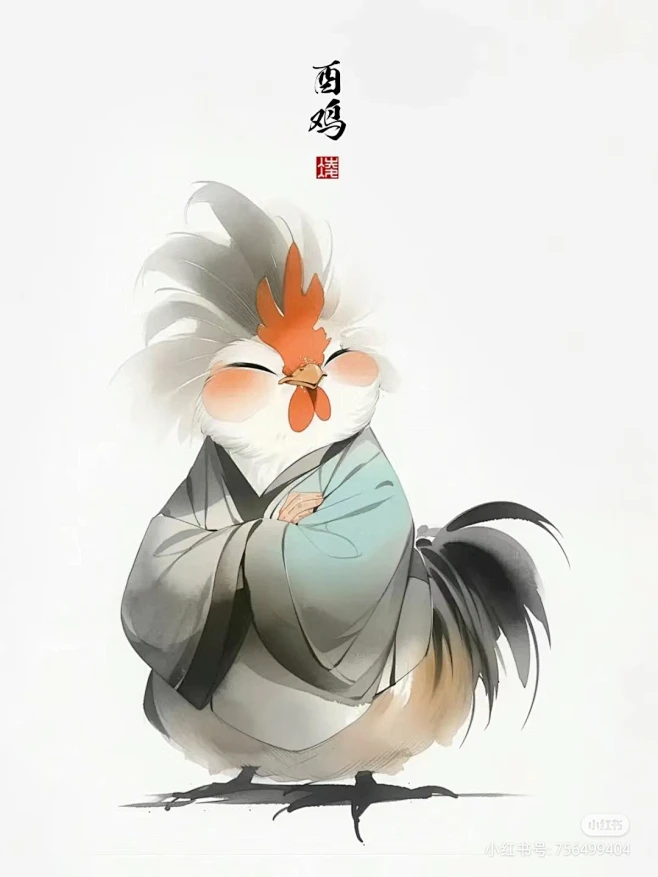
What the Rooster Year Truly Represents: You’re Not Picky, You’re a “Calibration-Focused System”
In the Zodiac system, the Rooster corresponds to the Earthly Branch You, associated with the Metal element. Its key isn’t “hardness,” but clarity: sharp, discerning, able to differentiate and align. A more intuitive translation is: calibration / quality control energy—you're sensitive to errors not to be harsh on others, but to bring things back to their correct position.
Thus, the Rooster’s advantage is never “luck,” but three things: you can see what’s wrong; you can’t tolerate vagueness or sloppiness; and you can gradually refine a chaotic situation into something usable, reliable, and deliverable.
Many call this “perfectionism.” A more accurate description is: you are naturally like a quality controller. You don’t love finding faults; you are simply sensitive to errors. Understanding this internal mechanism is the starting point for managing the Chinese Astrology Year of the Rooster.
The problem is: when you make “calibration” your long-term default task, you’ll struggle to find genuine satisfaction.
Why You Often Feel “Not Good Enough”: It’s Not High Standards, It’s Premature “Editing Mode”
The typical drain for the Rooster isn’t busyness, but continuous proofreading. Before something is finished, your mind has already started editing—checking for risks, spotting flaws, anticipating challenges, patching holes in advance.
Outsiders only see your reliability, clarity, and ability to manage the big picture. What you feel is a very real pressure: I cannot make a mistake. I must deliver something that holds up. I must polish every detail so others can’t find fault.
This system is sophisticated, but the cost is: you rarely experience a “sense of completion.” Finishing a task doesn’t automatically lead to relaxation, but to the next round of revisions.
Over time, this breeds a hidden emotion—not a breakdown, but chronic dissatisfaction. You always know “it could be a little better,” so it’s hard to stop.
Three Common Scenarios for Rooster Energy
At Work
You’re not procrastinating; you are aligning to standards. The closer to delivery, the tighter you get—revising, redoing, restarting. It’s not lack of ability; it’s that you know delivering equals credibility.
In Relationships
You’re not cold; you dislike inconsistency. Hot-and-cold behavior or words that don’t match actions exhaust you quickly because your system judges: the structure is unstable; continued investment is a loss.
Internal System
What truly tires you is the perpetual “revised version” in your mind—replaying a sentence, re-checking a choice, correcting micro-deviations. You’re not overly sensitive; your standard-sense is simply always on.
In the long run, you don’t become stronger, but tighter: light sleep, tense muscles, dulled emotions—your body feeling perpetually on standby.
The Truth Behind “The Clearer You Are, The Harder It Is to Be Satisfied”: Mistaking Calibration for Security
The Rooster’s strength is discernment and correction. The problem is: when you make correctness your only source of security, you turn life into a never-ending quality inspection.
A hidden cycle emerges: see a flaw → immediately correct it → finish correction → scan for more flaws. Flaws always exist, so satisfaction is perpetually delayed. You become more like a system administrator than someone who can enjoy results.
You don’t fail to understand relaxation; you don’t allow yourself to relax—because relaxing can feel like losing control. This is one of the most common traps inside the Chinese Astrology Year of the Rooster.
Career: You Suit “Building Quality Barriers,” Not “Relying on Grit”
The Rooster’s best path to winning isn’t charging ahead recklessly, but making quality your barrier. Suitable paths often share: clear standards, room for iterative optimization, and long-term compounding.
You easily build an advantage in fields like delivery/review/standards, proposals, systematized output, product, content, technology, design, consulting, and branding—tracks where refinement becomes an asset.
What truly holds you back often isn’t ability, but making “must be perfect” a precondition for starting. A more supportive rhythm is: treat the first version as a launch (get the system running), then use your strength to calibrate.
- Launch first: treat version 1 as a working system, not a final verdict.
- Calibrate after: refine with your standards once momentum exists.
- Don’t delay “done”: define what completion looks like before you begin.
Relationships: You Seek Not Romance, But Structural Stability
In relationships, what the Rooster fears most isn’t arguments, but lack of clarity. Ambiguity drains you because you automatically start calibrating the other person: what do they really mean? does this contradict last time? should I keep investing?
You’re easily misunderstood as “picky,” but what you truly need is clear structure: state needs, negotiate boundaries, and correct inconsistencies early so the relationship can align.
If the other person never wants to align, don’t trade surface peace for “enduring a bit more.” For you, stability isn’t built through endurance; it’s built through clear structure.
How to Truly Feel Lighter: Giving “Calibration” an On/Off Switch
You don’t need to force yourself to be less particular. You need to turn calibration from “default standby” into a controllable tool. That’s how the Chinese Astrology Year of the Rooster becomes sustainable instead of exhausting.
- Grade your calibration: Level A (critical), Level B (good enough), Level C (rough OK).
- Define completion: include “when is it done?” inside your standards.
- Set a delivery threshold: deliver at ~80%, iterate the remaining 20% after feedback.
- Practice a shutdown ritual: archive / send / close the tab to signal “finished.”
- Shift critique to review: learn patterns without punishing yourself.
Your goal isn’t to lower your standards. It’s to apply them where they matter most—and reclaim completion as a real endpoint.
Why Just Knowing the Rooster Year Isn’t Enough
Understanding the Rooster’s calibration energy explains your sensitivity to standards, correctness, and detail. But it can’t answer: why do you get especially anxious in certain phases, who triggers your tension more easily, and what truly restores you besides endurance?
These answers live in your personal BaZi (Four Pillars of Destiny) structure: where your pressure points are, where recovery outlets exist, and what balances over-calibration. The same Rooster energy manifests differently across different structures and life phases.
Your environment (Feng Shui) can also amplify or ease this tension. Noisy, oppressive, chronically unstable spaces keep you in editing mode; calmer, supported spaces help the nervous system stand down.
When Should You Stop Telling Yourself “Fix It a Bit More”?
If you identify with two or more of the following, continuing to rely on endurance won’t truly solve it: you perform well but are almost never satisfied; you can’t relax even after finishing; you get stuck in final stages revising until drained; in relationships, you’re constantly aligning and correcting; your body shows tension, light sleep, digestive strain, or emotional numbness.
This isn’t about being weak; it’s your system operating under chronic high pressure. What you need isn’t stricter discipline, but more accurate discernment: where to keep calibrating, and where to allow completion.
Rooster Years & Important Date Boundary Reminder
Recent Rooster Years (12-year cycle): 2029, 2017, 2005, 1993, 1981, 1969, 1957, 1945, 1933 (and so on, adding or subtracting 12 years). Crucial note: the zodiac year transition can be defined by either the Chinese Lunar New Year or the solar term Start of Spring (Li Chun). If your birthday falls between late January and mid-February, you may be on the cusp and should verify using precise calculation. This timing nuance matters when interpreting the Chinese Astrology Year of the Rooster.
Conclusion: The Gift of the Rooster Year
The Rooster year never concludes that you are destined to be tired. It offers a reminder: you possess a sharp tool—discernment, standards, and corrective ability. Used correctly, it lets you walk steadily and far. Used incorrectly, it keeps you in chronic tension.
If you haven’t felt “I can be at ease after finishing” for a long time, it’s often not because you’re not good enough, but because you need a more systematic calibration: seeing your structure, pressure sources, recovery channels, and current life phase together.
Only then can you know where to continue refining, where to put down the red pen, and live with more ease. Exploring the complete system behind the Chinese Astrology Year of the Rooster is precisely for attaining this profound self-liberation and balance.
Chinese Astrology Year of the Rooster · Year of the Rooster meaning · You (酉) Earthly Branch · Rooster in Chinese metaphysics · Metal clarity & calibration · standards and quality control · editing mode · completion threshold · BaZi Four Pillars of Destiny · Li Chun vs Chinese New Year boundary