
Chinese Astrology Year of the Tiger: Why Does the More You Want to Charge Ahead, the More You Risk Losing Control, Facing Backlash, and Burning Out?
When you look up the Chinese Astrology Year of the Tiger, you are probably not searching for a simple line like “Tiger people are brave.” What you are really trying to confirm is a very specific, very tangible experience: you move fast, you decide quickly, and you have strong drive—people see courage. But inside, you increasingly feel urgency, agitation, and an inability to slow down—once you start, it is hard to pull back; when pressure hits, you push harder; and after you push through, you do not feel relief. You feel emptiness, exhaustion, or a sudden “power-out.”
You are not weak. You are repeatedly running in overload. This is a core challenge revealed by the Chinese Astrology Year of the Tiger, and one of the main reasons people researching the Chinese Astrology Year of the Tiger recognize this pattern immediately.
The Year of the Tiger corresponds to the Earthly Branch Yin (寅). In Chinese metaphysics, Yin is associated with Wood, often described through the imagery of a spring surge: quick to initiate, forceful in breaking through, and strong in forward momentum. Your advantage is that you can start decisively, take on hard challenges, and push situations past critical points.
Your cost is that when there is constant growth without settlement, bursts become your daily norm and “fighting mode” becomes a habit— the body and emotions eventually demand repayment. This tension pattern sits at the heart of the Chinese Astrology Year of the Tiger.
Start decisively, take on hard challenges, and push situations past critical points.
Without settlement and closure, “breakthrough mode” becomes daily life—until the system crashes.
Often, your exhaustion does not come from the tasks themselves. It comes from a missing component in the system: brakes. This missing brake mechanism is a recurring theme discussed in the Chinese Astrology Year of the Tiger.
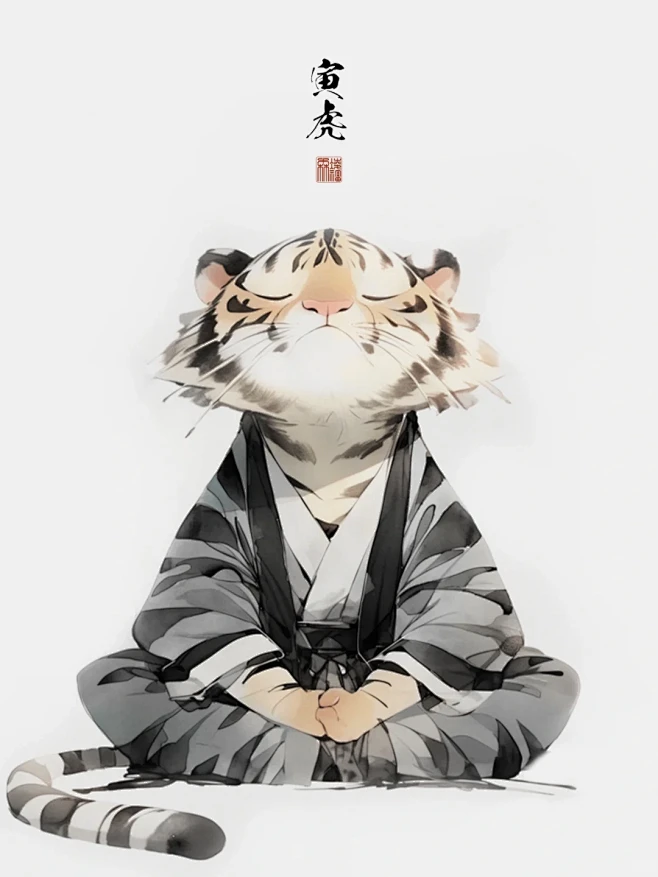
What the Tiger Represents: Not a Label, but a Launching Foundation
In the Twelve Zodiac Animal system, the Tiger aligns with Yin. Its core rhythm resembles spring wood: the moment conditions allow, energy surges forward—moving first, then forcing results to follow. This launch-first pattern is a defining feature of the Chinese Astrology Year of the Tiger.
This rhythm has clear strengths: you dare to start and dare to push limits, you can create movement in chaos and force solutions to appear, and you seize opportunity while confronting pressure directly.
But there is a trade-off. When forward drive becomes too forceful and consolidation is too weak, you enter a classic overdrive pattern: progress increases, but the body and emotions are being burned. You may look stronger on the outside—while becoming more brittle within.
Why It Feels Like You “Cannot Stop”: You Turn Pressure into Motion
Yin carries a strong movement impulse. When uncertainty appears, many Tiger-rhythm people do not wait. They move first: speed becomes a way to buy certainty, intensity becomes a way to suppress unease, and action becomes the substitute for reassurance. Understanding this motivational core is essential when interpreting the Chinese Astrology Year of the Tiger.
Common patterns include: wanting to resolve pressure immediately; the more you are questioned, the more you want to prove yourself; the more chaotic things are, the more you try to impose order forcefully; emotions may not show clearly, but the body enters a fight-or-flight state.
In teams, Tiger energy is often silently assigned: “Give it to you—you can handle it.” Others see courage. You may feel something else: if I slow down, everything collapses. The price of strength is often the difficulty of allowing yourself to downshift.
The Real Problem: You Mistake Burst Power for the Only Solution
Tiger energy is designed to break deadlocks. The problem begins when “breakthrough mode” becomes daily life. This is a pattern description, not a medical diagnosis: strong initiation with insufficient closure can cause pressure to burn in the system, leading to repeated overload.
You are not lacking ability. You are using a crisis tool for ordinary living.
Three Common Scenarios
Work
You take on too much, push hard at the start, and create rapid early progress. Then follow-through becomes heavy, and you rely on late nights to keep the speed alive. Fatigue rises together with risk.
Relationships
You dislike dragging things out and want clarity immediately. When emotion spikes, you feel you must “solve it now.” But the harder you push for control, the more likely the situation becomes chaotic—or the other person retreats.
The body
You can sprint for a while, but recovery gets slower: shallow sleep, rising internal heat, tight muscles, irritability. Eventually there is a crash—emptiness, numbness, avoidance, a sudden shutdown.
You may think you are “just tired.” You may actually be operating on overdraft.
Career: You Excel at Breakthrough Work—But Risk Living in Permanent War
Tiger rhythm is excellent for pioneering, making breakthroughs, seizing key moments, fighting hard battles, and turning the impossible into possible. The real danger is not risk-taking—it is turning “war intensity” into daily life, substituting short-term bursts for long-term systems.
Without consolidation, the same cycle repeats: charge → hold on → burn out → charge again. You do not lack drive. You need settlement—turning breakthroughs into sustainable structure.
More supportive strategy within the Tiger framework: attack one critical point first (not three battlefronts at once), install closure actions after each breakthrough (documentation, templates, handover, review), and use cycles instead of continuous force (settle results in 7–14 day windows). What you need is not greater speed—it is sustainability.
Relationships: You Need Boundaries and Rhythm, Not Stronger Control
Tiger energy in relationships can swing between two extremes: pushing hard or disconnecting completely. You want clarity, not ambiguity. But relationships are not battlefields. When anxiety becomes control and unease becomes interrogation, certainty may increase short-term— but long-term stability weakens.
You are not uncaring. You are translating insecurity into “must solve immediately.” More effective approaches: define boundaries (what can be discussed, what lines cannot be crossed), slow the rhythm slightly (give the other person time to respond, and yourself time to cool), and trade winning for stability—stability is supported by structure, not conquered by force.
You do not need to become better at control. You need to become better at stopping.
How to Stabilize: Turn Drive into Sustainable Wins
You do not need to eliminate your charge. You need brakes—and you need wins that can be settled. The key practice is not being fiercer. It is becoming better at closure.
- Define braking signals: late nights, irritability, “solve everything now” impulses—downshift indicators.
- Turn sprints into windows: limit each push (2–4 hours, one day, or three days), then close out and rest.
- Use a consolidation checklist: ground every gain into structure (process, templates, delegation, review).
- Treat recovery as cost, not reward: without recovery, the price of the next sprint rises sharply.
- Use the body as the master switch: sleep quality, heart rate, and muscle tension are your honest thermometer.
Why the Tiger Year Alone Is Not Enough: The Real Map Is BaZi
Understanding the Chinese Astrology Year of the Tiger is a strong entry point. It explains habitual reaction patterns—how you surge, how you break through, and how you respond under pressure. But what determines when you overcharge, which patterns you repeat, and what stabilizes your rhythm is your full BaZi (Four Pillars of Destiny) structure: where your brakes are, where your recovery channels are, and which situations require pullback rather than force.
Your environment (Feng Shui) can also amplify or soften this charging energy. Changes in space, team structure, and daily rhythm can immediately affect sleep and agitation—not simply through willpower, but through structure and environment working together. What you need is not more strength. It is more accurate rhythm.
When to Stop “Pushing Through” and Start Seeing the Pattern Clearly
If two or more of the following are true, do not solve it by “one more push”: you rely on bursts, but recovery gets slower and slower; you get carried away at key moments and regret it later; the same overload pattern repeats for over a year; your body keeps sending alarms (sleep disruption, palpitations, heat symptoms, chronic tension, irritability, sudden emptiness).
At this point, the key question is not effort. It is discernment: where should you charge—and where must you pull back? What are your braking points and recovery outlets?
Tiger Years and Date Boundary Reminder
Common Tiger Years (12-year cycle): 2022, 2010, 1998, 1986, 1974, 1962, 1950, 1938, 1926 (and so on, every 12 years). Important note: the zodiac-year boundary may be defined by either Chinese New Year (Lunar New Year) or the solar term Start of Spring (Li Chun), depending on the system used. If you were born in late January or early February, you may be on the cusp and should verify using a more precise calculation method.
Conclusion: The Tiger Year Is Not About Fierceness—It Is About Turning Drive into Sustainable Wins
The Year of the Tiger does not tell you to charge forever. It reminds you that you are naturally capable of initiating momentum and creating breakthroughs— but you must also learn consolidation. If you recognize the pattern—the more you charge, the tighter you get; the more you push, the emptier you feel— then seeing your structure clearly once often helps you win more steadily than continuing to force speed.
That is the deeper value of exploring the Chinese Astrology Year of the Tiger—and the complete system behind it.
Chinese Astrology Year of the Tiger · Year of the Tiger meaning · Yin (寅) Earthly Branch · Tiger in Chinese metaphysics · Yin Wood imagery · spring surge rhythm · breakthrough mode · brakes and closure · BaZi Four Pillars of Destiny · Li Chun vs Chinese New Year boundary