
Feng Shui Desk Placement
Of all the furniture decisions in a home or office, where you place your desk has more leverage over your daily experience than almost any other single choice. A desk is where you spend hours in focused attention — and focused attention makes you more sensitive to spatial conditions, not less. Getting feng shui desk placement right means understanding command position, personal direction, and the room's energy chart, systematically.
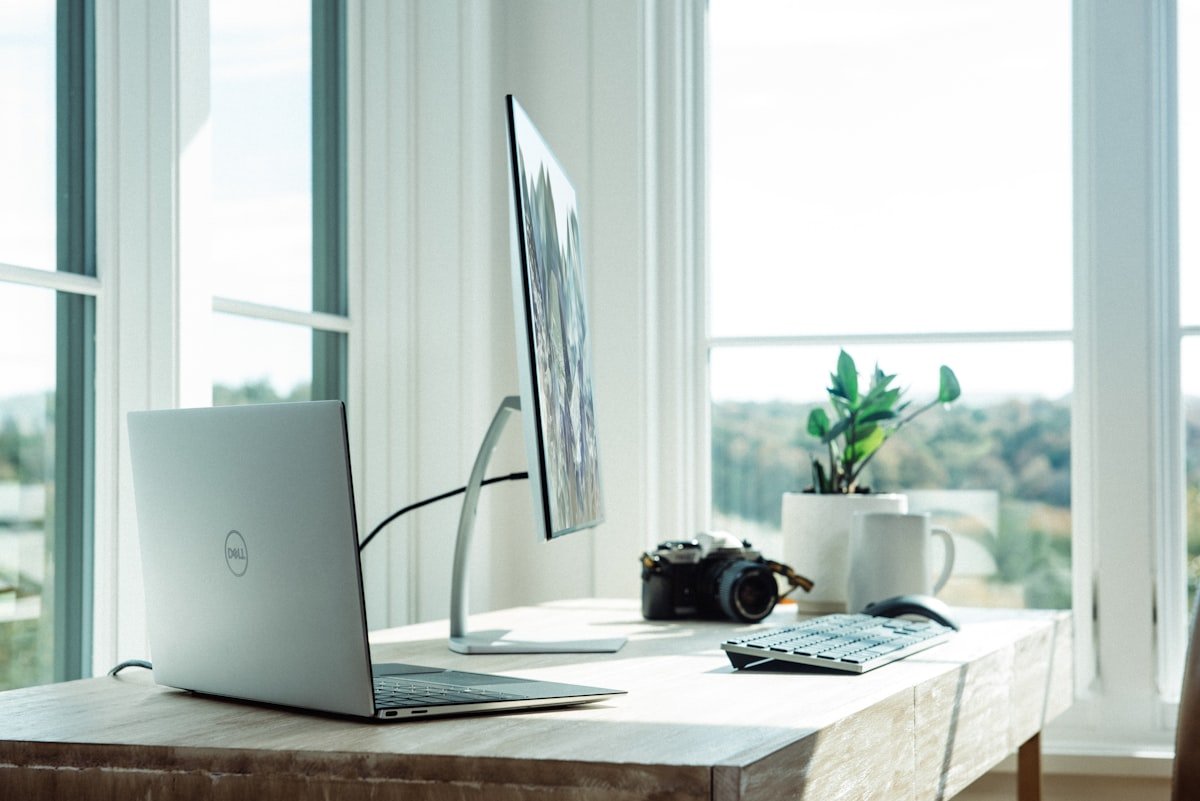
Of All Furniture Decisions, Desk Placement Matters Most
In classical feng shui, there is a principle that surprises most people: where you place your desk has more leverage over daily experience than almost any other single furniture choice. More than the sofa. More than the bed. Because a desk is where you spend hours in a state of focused attention — and focused attention makes you more sensitive to spatial conditions, not less. This is why feng shui desk placement is treated as its own discipline. A poorly placed feng shui desk can leave you tired by 2pm without knowing why. A correctly positioned one amplifies focus rather than draining it.
Serious practitioners spend more time on desk position feng shui than on any decorative element in the room. The desk is where energy interacts most directly with spatial structure — and every rule that follows comes from observing how qi moves around a person in sustained concentration. In command position feng shui, the desk is the single most important station in any workspace.
What the Command Position Actually Means for a Desk
The command position is the most cited rule in desk position feng shui — and also the most misunderstood. Most explanations reduce it to "sit facing the door." That is incomplete. The command position for a feng shui office desk has three structural requirements that must all be present.
The wall provides mountain support — classical term for structural backing that translates psychologically into feeling secure. A feng shui desk with its back to open space, a walkway, or a window lacks this support. People at such desks feel watched or exposed even when alone. In command position feng shui, the wall behind the chair is non-negotiable.
The desk should be positioned so the door is visible, ideally at a diagonal. If facing the door directly, qi creates a straight rush — energy equivalent to someone stopping inches from your face. If the door is behind you, you cannot see who enters, creating low-level vigilance. Good desk position feng shui puts the door in view, at an angle.
Ceiling beams compress qi downward — sitting under one for hours creates pressure that becomes mental fatigue. Sharp corners pointing at the desk create "sha qi" — cutting energy. Check upward from your planned feng shui desk placement: if a beam crosses overhead, move the desk until the beam is in front of or behind you, not above.
A desk against a wall with a diagonal door view but under a beam still fails — downward pressure overrides mountain support. A desk with solid backing and no beam but facing a wall still fails — qi cannot reach you. Meeting two of three is not "good enough." The room either supports focus structurally, or it quietly works against it.
Five Common Desk Placement Mistakes to Check Now
These are the most frequent errors in feng shui desk placement assessments. Walk through them in order, starting at your workspace door.
Desk Against a Window
Light from behind creates glare and eye strain. In feng shui, the window dissipates mountain support — qi exits through glass. The feng shui desk is not a window seat. If the only wall has a window, close blinds and place a tall plant or bookshelf between desk and window as an artificial mountain.
Desk in the Center of the Room
Popular in executive offices, this fundamental feng shui desk placement error leaves no wall support while qi circulates around you in all directions. The center position may look authoritative — it feels exhausting. A desk against a wall, facing into the room, is always better for sustained focus.
Desk Facing a Wall
The opposite error — "facing the mountain" blocks qi from reaching you. The fix: pull the feng shui desk at least 60cm from the wall and position yourself to face into the room. You should always face open space, not a wall.
Shared Desk Back-to-Back
Two desks back-to-back mean neither person has mountain support — each back exposed to another workspace. In desk position feng shui, place desks against opposite walls facing the center, or in an L-shape where each has a wall behind.
Desk Aligned with a Distant Hallway Door
When a hallway aims directly at your desk, qi accelerates along the corridor. The fix: place a plant or screen between the hallway opening and desk. Any vertical object interrupting the path works as command position feng shui buffer.
Walk Through Your Workspace Now
Start at the door. Check all five. If three or more apply, your feng shui office desk is working against your focus — move the desk before changing anything else. Most people find at least two. The goal is zero.
Desk Direction: Why Generic Advice Fails
The question of which direction a feng shui office desk should face generates the most misleading advice. "Face east" or "face north" ignores the two variables that determine the answer: your Kua number and the room's Flying Star chart.
Your Kua number identifies four favorable directions — Sheng Qi, Tian Yi, Yan Nian, Fu Wei. In the Eight Mansions system, your feng shui desk should face one of these. But personal direction is subordinate to spatial conditions. If your best direction faces a wall, take the second-best that opens to the room. Room structure always wins over direction in desk position feng shui.
The annual flying stars affect which room sectors support desk work. Stars 1, 4, 6, and 8 are favorable. A feng shui desk in a sector occupied by Star 2 or 5 may undermine focus regardless of command position. This is the time-sensitive layer of desk position feng shui — check annually, as stars shift every February.
Home Office, Bedroom Desk, and Cubicle: Special Cases
A desk in a bedroom creates a feng shui desk placement conflict: the bedroom is yin space for rest, the desk introduces yang energy for activity. When both share a room, neither functions fully. Minimum remedy: separate the zones visually with a divider, bookshelf, or curtain. At the end of the workday, close the laptop and cover the feng shui desk — the brain needs the room to say "rest now" before it can rest.
For open-plan offices and cubicles, the challenge reverses: too much yang, no protected focus pocket. In a cubicle, the desk is your only territory. Place a plant on the desk as a living barrier, choose the highest walls available, position the monitor to block direct sight from the entrance to your face. These feng shui office desk adaptations work within constraints that cannot be structurally changed.
Common Questions About Feng Shui Desk Placement
Neither directly. Your feng shui desk should face into the room with the door visible at a diagonal. Facing a wall restricts qi; direct door alignment creates a straight rush. The ideal desk position feng shui gives you a view of the room and entrance from a protected angle.
Face one of your four favorable Kua directions — but only within positions the room supports. If your best direction faces a wall, take the second-best that faces open space. In feng shui desk placement, spatial conditions always take priority over personal direction.
Yes — this is the most problematic feng shui desk configuration. Not seeing who enters creates subliminal vigilance. If you cannot move the desk, place a mirror on your monitor that reflects the door, giving visual awareness without turning around.
Yes, with deliberate separation. Use a visual divider and cover the desk at end of day. A bedroom feng shui desk requires active zone management — the room cannot serve both functions simultaneously without help.
When standing, you are your own mountain. Command position rules still apply: avoid direct door alignment and overhead beams. Standing desks benefit from a vertical visual anchor at eye level. Feng shui desk principles transfer; the application adjusts for the changed height.
The feng shui desk surface should be mostly clear: a small plant, a task light, one meaningful object. Stacks of paper and tangled cables are stagnant qi that drains focus. Clear the desk at the end of each day.
Where you sit while working affects every hour you spend at your desk. A professional assessment identifies what individual tips cannot see.
An Office Feng Shui Consultation maps your room's Flying Star chart against your personal Kua directions, identifies the optimal desk sector for sustained focus, and accounts for structural constraints. For remote workers and business owners, desk placement is not decoration — it is infrastructure.
- Flying Star chart — know which sector supports focus this year
- Kua direction analysis — find the desk orientation for your chart
- Command position verification — all three structural requirements checked