Feng Shui Mirror Placement
A mirror is not just decoration. In feng shui, it is an energy tool — and feng shui mirror placement determines whether that tool amplifies harmony or multiplies chaos. One mirror on the wrong wall can undo the balance of an entire room.
Walk Into Any Room With a Mirror — And Watch What Happens to the Energy
Let us start with a scene you have experienced a hundred times. You walk into a room. The light from the window hits a mirror on the far wall and bounces back. You see yourself. You also see the reflection of the doorway behind you, the lamp in the corner, maybe a slice of the hallway you just walked through.
In Compass School feng shui (理气), mirrors are unique among household objects because they do not merely sit in space — they alter space. A mirror doubles what it reflects. Place one opposite a window, and the incoming light — and the qi carried by that light — gets bounced back into the room rather than settling. Place one opposite a cluttered corner, and you have just visually doubled the clutter — and, in feng shui terms, amplified the stagnant qi that clutter produces. This is not superstition. It is geometry. The mirror placement feng shui principle is simple: a mirror multiplies whatever it faces, for better or worse.
This is also why more mirrors are not better. The modern interior design instinct — to add mirrors for a sense of spaciousness — often creates rooms where qi bounces between reflective surfaces without ever settling. In classical terms, unsettled qi produces unsettled occupants. The goal of feng shui mirror placement is not maximum reflection. It is intentional reflection.
Effective mirror placement feng shui follows one rule above all others: a mirror should reflect something worth doubling. A beautiful view, a dining table set with food, a source of natural light — these are subjects that benefit from being amplified. A cluttered corner, a toilet, a sharp architectural angle — these become problems when doubled. Every feng shui mirror placement decision in your home should begin with the question: what exactly is this mirror reflecting?
Walk Into Your Bedroom: The Mirror Facing the Bed Is the Most Common Mistake
You are lying in bed. The lights are off. Across the room, a full-length mirror on the wardrobe door catches the faint glow from the window. You shift position, and in your peripheral vision, something moves — your own reflection. Your body registers it before your mind does. That microsecond of startle — repeated dozens of times through the night as you cycle between sleep stages — is the reason a feng shui bedroom mirror that faces the bed is considered one of the strongest disruptors of restful sleep. Understanding feng shui mirror facing bed dynamics is essential because the bedroom is where you spend the largest uninterrupted block of time in any room — and where you are most energetically vulnerable.
The Spirit Disturbance (魂觉干扰)
Classical feng shui texts describe the feng shui mirror facing bed as a disturbance to the hun (魂, the ethereal soul) during sleep. In traditional Chinese understanding, the hun separates slightly from the body during deep rest to travel and regenerate. A mirror facing the bed is said to startle the returning hun — it sees its own reflection and recoils, causing restless sleep, vivid or disturbing dreams, and a sense of fatigue upon waking even after a full night's rest. This is why feng shui bedroom mirror placement is taken so seriously in classical practice — the bedroom is the room where the hun's nightly journey occurs, and any disruption to that process compounds over time. This traditional language may sound mystical, but it describes a phenomenon that modern sleep science would recognize: environmental stimuli that pull the sleeper toward wakefulness during the transition between sleep cycles.
Optical Disturbance During Sleep
The modern interpretation of this traditional warning is straightforward. During the night, even in a darkened room, light enters — from streetlights through curtains, from the LED on a charger, from a partner's phone screen. A feng shui mirror facing bed catches and redistributes every photon of that light, creating micro-changes in ambient brightness that the sleeping brain processes as potential environmental change. Your visual cortex does not fully shut down during sleep — it continues to monitor the environment through closed eyelids. A mirror in the line of sight creates an unstable visual field that leads to lighter, more fragmented sleep architecture. The traditional advice — cover the mirror at night or remove it from the bedroom — aligns with what we now know about how light and reflection affect circadian rhythm and sleep depth.
If you share your bedroom with a feng shui bedroom mirror that you cannot remove — built-in wardrobe mirrors, mirrored closet doors, a rental fixture — the simplest remedy is a fabric cover drawn across the mirror at night. Even a thin curtain panel suspended from a tension rod mounted just above the mirror surface works. Proper feng shui mirror placement in the bedroom means either eliminating reflective surfaces facing the bed or rendering them inactive during sleep hours. The principle is not to destroy the mirror. It is to give it a nightly rest period so the room can return to the dim, still, reflective-free state that sleep evolved to require.
Walk to Your Front Door: Why a Mirror Facing the Door Sends Energy Away
Now stand in your entryway. If you have a mirror directly opposite the front door — a common arrangement in apartments and narrow hallways — you are looking at one of the most frequently overlooked mirror facing door feng shui problems. This specific feng shui mirror placement error is easy to make because decorating instincts favor a mirror near the entry — but the location relative to the door is what determines whether the mirror helps or harms.
The front door is the primary qi mouth (气口) of the entire home. All incoming energy — carried by air, light, sound, and the movement of people — enters through this opening. A mirror placed directly opposite the front door acts as a barrier: it reflects incoming qi back out before it has a chance to circulate. In Compass School terms, the mirror creates a qi collision (对冲) — incoming energy meets its own reflection and stalls at the threshold. The mirror placement feng shui rule for front doors is simple: never opposite, always to the side. Homes with this configuration often feel unwelcoming without an obvious reason. Visitors hesitate at the door. Residents feel a subtle resistance to coming home. Opportunities that seem to be approaching never quite arrive.
This is the strongest form of mirror facing door feng shui conflict. Qi enters and is immediately reflected outward. The home never receives a full charge of incoming energy. If your entryway mirror faces the door and cannot be moved — because it is built-in or because the hallway has no other wall — shift it to a side wall where it reflects a pleasant interior view rather than the door itself. A mirror on a side wall can actually expand the entryway visually without blocking the incoming qi flow. Correcting this mirror facing door feng shui error is often the single highest-impact change you can make in an entryway, because the front door governs the energy intake of the entire home.
A mirror placed on a wall perpendicular to the front door — so that it reflects a console table, a piece of art, or a well-lit corner — does not interfere with the qi mouth. This is an example of correct feng shui mirror placement in the entryway. It can make a narrow entryway feel wider, which is a positive feng shui adjustment: a broad, welcoming entry supports a broad, welcoming life. The key distinction is whether the mirror catches the door's reflection. If you can see the door in the mirror while standing at the door, the mirror is still in the qi path and should be angled slightly away.
Walk Through the Rest of Your Home: Where Mirrors Belong
Beyond the bedroom and front door, the rest of the home offers opportunities for mirrors to do what they do best: expand space, carry light deeper into rooms, and frame pleasant views. Here is a room-by-room walkthrough of intentional feng shui mirror placement. The mirror placement feng shui principles for living and dining areas are more flexible than bedroom rules, but the same core logic applies: mirrors should amplify what you want more of, never what you want less of.
Reflect the Table, Not the Kitchen
The dining table is one of the best subjects for a mirror in the home. Reflecting the table — especially when set with food — symbolically doubles the abundance of the meal and the gathering. This is why many classical Chinese restaurants feature mirrors on dining room walls. The mirror placement feng shui rule for dining rooms is: reflect the food, the people, and the abundance — never the exits, the kitchen hazards, or the trash. Position the mirror so it reflects the table and the people seated at it, not the kitchen door or the trash area. A mirror that reflects the stove, however, is problematic: fire energy doubled by a mirror creates an overheated environment in feng shui terms, and in practical terms, it distracts the cook. The dining room mirror is one of the few placements that nearly all schools of feng shui agree is generally positive when positioned correctly.
Reflect Nature, Light, and Open Space
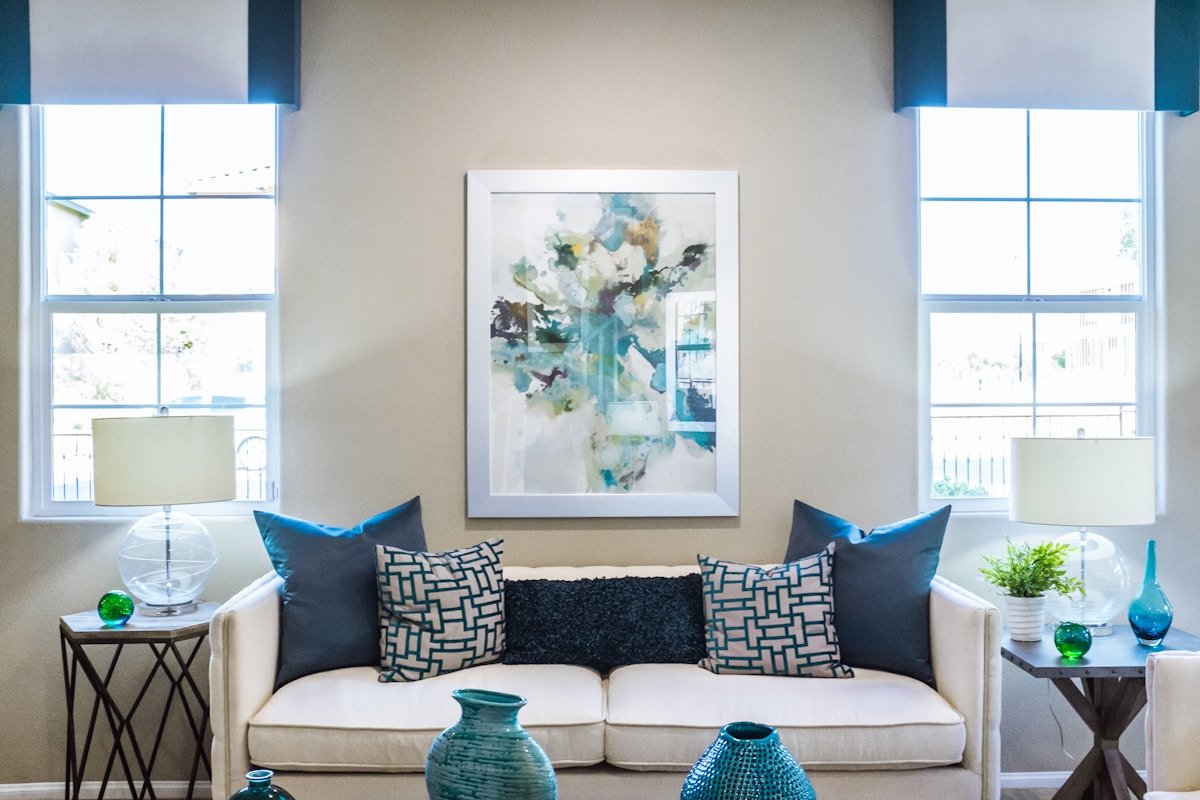
A living room mirror should be placed to reflect something worth doubling: a window with a view of trees or sky, a piece of art that brings you calm, an open area that makes the room feel larger. Good feng shui mirror placement in the living room means the mirror contributes to the room's expansive, welcoming quality rather than creating visual chaos. Avoid reflecting the television (amplifies electronic noise), a sharp corner (doubles the form sha), or the back of a sofa (cuts off the seated person's reflection at the neck, which in Form School is considered inauspicious). The north wall is traditionally considered favorable for a mirror in the living room because north is associated with the water element and mirrors carry a subtle water quality — reflective, still, deep — making the placement elementally harmonious.
The Bagua Mirror: A Different Tool Entirely
Walk outside your front door now. If you see a small octagonal mirror with a bagua design (八卦镜) mounted above a neighbor's door, you are looking at a specialized instrument — not a decorative item. The bagua mirror belongs to a different category of feng shui mirror placement than the ones inside your home. Indoor mirror placement feng shui is about managing qi within the living space, while bagua mirrors operate on a different principle entirely: external protection.
A bagua mirror is a protective tool used exclusively for external form sha (形煞) — harsh environmental shapes directed at the home from outside. A sharp roofline pointing at the front door. A T-junction where a road runs straight toward the house. A large tree directly blocking the entrance. In these specific cases, a bagua mirror mounted above the front door deflects the incoming harsh energy away from the home.
If you suspect an external form sha is affecting your home, a professional feng shui assessment can confirm whether a bagua mirror is the correct response. In many cases, less aggressive remedies — landscaping, fencing, curtain placement — can address the same issue without introducing a bagua mirror at all. The same assessment can also evaluate indoor feng shui mirror facing bed concerns and mirror facing door feng shui conflicts, since these three mirror-related issues — bedroom, entryway, and external — often overlap in homes with mirror-heavy decor.
Frequently Asked Questions About Feng Shui Mirror Placement
Size matters, but so does line of sight. A small decorative mirror on the opposite wall that is outside your field of vision when lying down has negligible effect. A full-length mirror directly facing the bed — where you can see your reflection from the pillow — carries the strongest impact. The rule of thumb for feng shui mirror facing bed assessment: if you can see yourself in the mirror while lying in your sleeping position, the concern applies. Cover it at night or relocate it. Good feng shui bedroom mirror practice treats any reflective surface facing the sleep position as a potential sleep disruptor.
Mirrored closet doors present the same problem when they face the bed. In fact, because they are typically larger than a wall-mounted mirror, their reflective field is broader and the disturbance effect can be stronger. If your bedroom has built-in mirrored closet doors facing the bed, the most practical solution is to hang a curtain track on the ceiling just in front of the closet and draw fabric panels across the mirrors at night. During the day, the mirrors can remain exposed — the feng shui bedroom mirror concern is primarily a nighttime issue because that is when the optical disturbance affects sleep. The feng shui mirror facing bed problem with closet doors is the same in principle as with wall mirrors, just scaled up due to the larger reflective surface.
Yes — if the view outside the window is pleasant. A mirror reflecting a garden, trees, or open sky brings beneficial qi deeper into the room. If the window faces a busy street, a parking lot, a neighbor's wall, or a sharp roofline, the mirror will amplify that undesirable view rather than the light. The mirror placement feng shui principle remains: a mirror multiplies whatever it reflects, so choose its subject carefully. This is consistent feng shui mirror placement logic across every room in the home — the mirror's subject determines whether it is an asset or a liability.
Round and oval mirrors are preferred in most classical feng shui because circles represent harmony, continuity, and the metal element in its most balanced expression. Square and rectangular mirrors are neutral — they represent the earth element and work well when the room needs grounding. Irregular or sharp-edged mirror shapes (diamond, triangle, jagged edges) should be avoided because the pointed edges introduce subtle form sha into the room — every sharp angle is a miniature cutting edge in the visual field. Framed mirrors are preferable to frameless ones because the frame provides a boundary that contains the mirror's reflective field. The mirror placement feng shui principle applies to shape as well: a round mirror reflects in all directions evenly, while a sharp-edged mirror directs energy toward its points.
In traditional feng shui, a mirror reflecting the toilet is considered unfavorable because it symbolically multiplies the draining function of the toilet — water and waste being flushed away. In practical terms, however, bathroom mirrors are usually positioned above the sink, and the toilet is often to the side rather than directly in the reflection, which reduces the impact. If your bathroom layout makes the toilet visible in the mirror, simply keep the toilet lid closed and the bathroom door shut when not in use. These two habits address the draining concern without requiring mirror relocation. The feng shui mirror placement principle here is the same as elsewhere: do not let a mirror reflect what you do not want multiplied.
There is no fixed number, but a useful test: stand in the center of the room and count how many reflective surfaces you can see without turning your head. If you see more than two, the room has what classical texts would call "unsettled qi" — energy bouncing between mirrors without a single calm resting point. This is particularly common in rooms with mirrored furniture (tables, consoles, cabinet fronts) combined with wall mirrors. The environment feels visually unstable because, technically, it is — every reflection creates a secondary visual field, and multiple reflections create nested fields that the eye must process simultaneously. Proper feng shui mirror placement means reducing mirrors until you can stand in the room and find at least one direction where the view is reflection-free and calm. More is not better when it comes to mirrors — intentionality is what separates good mirror placement feng shui from chaotic over-reflection.
Every mirror in your home is either helping or complicating the energy. A professional eye can tell you which.
Book a Home Feng Shui Consultation for a room-by-room feng shui mirror placement review — including feng shui mirror facing bed analysis, mirror facing door feng shui assessment, feng shui bedroom mirror recommendations, and external form sha evaluation to determine if a bagua mirror is warranted for your specific situation.
- Room-by-room feng shui mirror placement audit with before-and-after layout suggestions
- Feng shui bedroom mirror assessment — identify mirrors disturbing sleep with feng shui mirror facing bed analysis
- Front door qi mouth analysis with mirror facing door feng shui evaluation — ensure mirrors are not blocking incoming energy
- External form sha evaluation with bagua mirror recommendations where appropriate