
Home Feng Shui Consultation
A calm home changes everything: sleep steadies, your mind clears, and daily life feels easier.
From $399 / Home
✨ Book Your Feng Shui Consultation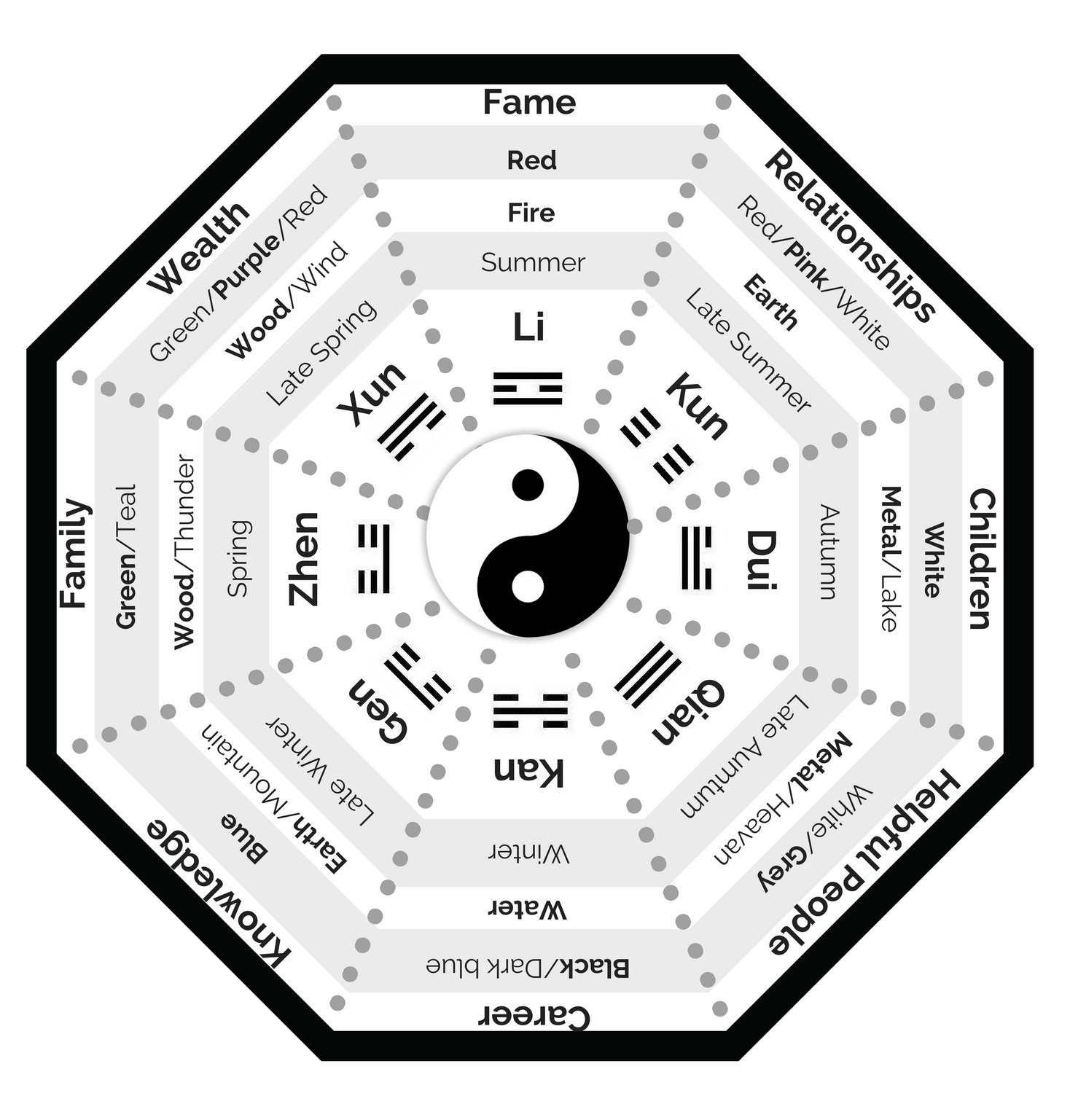
Bagua map reference image for Home Feng Shui Consultation and home energy alignment.
Have you ever walked into your home and felt something tighten—without knowing why? The rooms look fine. The décor is clean. But the space feels heavy, rushed, or oddly draining. You might notice you avoid a certain corner, you can’t settle on the sofa, or your bedroom never gives you deep rest.
A Home Feng Shui Consultation is a practical, pattern-based reading of your living space. It shows where energy (qi) enters, where it gathers, where it rushes, where it leaks, and what becomes sensitive over time—so you can make clear, livable adjustments that support your real life.
From $399 / Home
When a Home Looks Normal but Feels “Off”
Most people don’t book a consultation because they want more decoration. They book because something in daily life feels harder than it should:
- You step inside and feel instantly rushed or exposed
- Sleep is light, easily disturbed, or never fully restorative
- You feel restless at home—even in silence
- Focus collapses at your desk, even when you try
- Tension builds in shared spaces for no clear reason
- You keep rearranging furniture, but the discomfort returns
- After moving, renovations, or life transitions, the home feels unsettled
A Feng Shui Home Consultation helps you identify the hidden “pressure points” shaping these experiences—then gives you a simple plan to shift them.
Quick Self-Check: Do You Need a Home Feng Shui Assessment?
Tick what happens often:
- The front door area feels tense, rushed, or too “open”
- The living room looks fine, but nobody relaxes there
- One bedroom feels overstimulating at night (even with soft lighting)
- You feel better outside than inside your own home
- The same arguments start in the same spot
- You avoid one seat or one area without realizing it
If two or more are true, a Home Feng Shui Assessment can usually explain why—clearly and quickly.
What This Home Feng Shui Consultation Really Is
This is not fear-based advice. No panic. No dramatic warnings. No selling objects.
A Home Feng Shui Consultation is a structured reading of your space using classical Yang Zhai (residential Feng Shui) principles—translated into modern, practical steps. Think of it as a way to “read the home’s behavior”:
- Where does the home receive energy? (the first impact)
- Does the home hold calm, or does it leak it? (gather vs. drain)
- Where does movement feel forced or sharp? (daily routes and friction)
- Which zones are sensitive right now? (time cycles and Flying Stars)
- How do we restore balance without clutter? (Yin–Yang and Five Elements)
Many people feel immediate relief simply from finally naming the pattern: “That’s why this room never feels restful,” or “That’s why the entry always feels tense.” Then we turn insight into action.
What You Receive From Your Home Feng Shui Reading
Your Home Feng Shui Reading is designed to be easy to use in real life—not theoretical.
Deliverables (clear and concrete)
practical markings and guidance you can follow (based on your floor plan)
where external influence hits first and how to buffer it
how to slow rushing energy and reduce friction routes
placement, support, and “command position” guidance
where to keep quiet, where you can activate now
the top 3 changes that create the biggest shift first
light, material feel, color intensity, visual weight, and usage—kept minimal and livable
no clutter, no shopping lists, no unnecessary “cures”
Clients often describe the result as: “The home finally feels like it can hold calm.”
Home Feng Shui Assessment: A Practical Four-Layer Method
A real Residential Feng Shui Consultation looks at the home through four complementary layers. Each layer explains a different source of support or pressure.
1) External Environment (where the qi first hits)
We review the outside approach and landform context (Form School / Landform, Luan Tou): roads, open gaps, nearby structures, water lines, and how the main openings receive incoming qi (Lai Qi). We check common pressure patterns such as road rush (Lu Chong), reverse-bow leakage (Fan Gong), compression points, and sharp-corner influence (Jiao Sha).
In everyday terms: if the outside “presses,” you may feel tense before you even settle in—like your home never fully relaxes.
2) Internal Layout (how the home holds and moves energy)
We read your floor plan as a living system: how qi enters (Na Qi), where it gathers, and where it rushes or leaks through daily movement lines. We look for friction patterns like door clash lines (Men Chong) and straight-through leakage (Chuan Tang). When genuinely helpful, Ba Zhai (Eight Mansions) is used as supportive reference—not rigid rules.
In everyday terms: you keep adjusting furniture, but the home still feels unstable because the pressure is structural and repeats daily.
3) Time Layer (why a room changes over months or years)
We map the home into nine sectors (Nine Palaces) and read time influence using Xuan Kong Flying Stars—annual first, monthly when needed. This reveals which zones should stay calm versus active right now, and why a room can feel “fine before” but sensitive later (including practical awareness around Period 9 shifts).
In everyday terms: the discomfort seems to “move” or intensify at certain times—even if nothing obvious changed.
4) Balance Layer (turning insight into livable changes)
We translate findings into simple adjustments using Yin–Yang and Five Elements correspondence logic. This is practical design logic—brightness, softness, order, texture, visual weight, and how the room is actually used.
In everyday terms: the home begins to feel quieter, more grounded, and easier to live in—without adding clutter.
How the Home Feng Shui Consultation Works
This Home Feng Shui Consultation can be done remotely with clear materials, and the process stays straightforward.
Share your space information
You send:
- A floor plan or simple layout sketch (hand-drawn is fine)
- Facing direction notes (a phone compass is okay)
- A rough center point mark on the plan
- Photos or short videos of key areas and the outside approach
- If you’re in a high-rise: the floor level
Not sure how to prepare this? I’ll guide you step-by-step.
Review, mapping, and pattern reading
I study the plan, direction, and surroundings to map:
- Entry impact and first-pressure points
- Movement lines and leakage routes
- Key zones for sleep, relationships, and focus
- Bagua overlay where relevant
- Flying Star sensitivity when needed
Recommendations you can actually apply
You receive clear guidance for:
- Bed/desk placement and support (command position)
- Entry buffering and flow adjustments
- Light/material/color intensity tuning
- “Do / avoid” timing notes for sensitive zones
Your consultation report
You receive a personalized written summary or voice-style overview with practical steps. If anything needs clarification, we confirm details before final recommendations.
✨ Visual clarity · Practical guidance · Real energy alignment
A Small Example: The Pattern Your Home Repeats
A client once said: “The place is clean, but the moment I walk in, my chest feels tight.”
The layout looked normal—until we traced the entry line and saw a straight, rushing path into the main living zone with no buffering space to receive and settle energy. After a few simple adjustments—slowing the first impact and re-centering the living area—the home stopped feeling “on edge.”
That’s what a Home Feng Shui Reading does: it explains the feeling you already have, then gives your home a calmer rhythm.
Pricing: Home Feng Shui Consultation
Home Feng Shui Consultation — Starting at $399 / Home
From $399 / HomePricing depends on size and complexity (single-level vs. multi-floor, number of key rooms, and external context).
Starting at $399 includes:
- A four-layer Home Feng Shui Assessment (External · Internal · Time · Balance)
- Review of entry, bedroom(s), and one primary workspace or living focus
- Calm vs. active zoning guidance for current time influence
- A prioritized action list you can apply without major renovation
Optional additions (only if needed):
- Multi-floor or large property expansion
- Additional bedrooms or separate units
- Faster turnaround / priority scheduling
- Follow-up refinement after you implement changes
Why Choose This Residential Feng Shui Consultation
This Residential Feng Shui Consultation is designed to feel both intuitive and clear: you will sense the pattern—and you will understand it.
- Rooted in classical systems, explained in simple modern language
- No fear-based rules (no panic scripts, no dramatic warnings)
- No object selling (no forced cures, no clutter)
- Focused on real life—rest, clarity, harmony, and stability
- Your home has a story. A Feng Shui Home Consultation helps you read it—and adjust what’s been quietly working against you.
FAQ
Can this be done online?
Yes. With a floor plan, facing direction, and clear photos/videos, an online Home Feng Shui Consultation can be precise and practical.
I rent. Is a Home Feng Shui Assessment still useful?
Absolutely. Most improvements come from placement, flow, lighting, and small adjustments—no renovation required.
Is this fortune-telling?
A Home Feng Shui Reading is a pattern-based reading of the space, including timing sensitivity. It does not promise guaranteed outcomes, but it often explains why certain areas feel stuck—and how to shift the environment so you feel more supported.
Will you ask me to buy items?
No. Any suggested purchases are minimal, optional, and only recommended when they genuinely support structure and function.
Ready to Realign Your Home?
If your home looks fine but feels off, there is usually a reason. Let’s find where energy presses, where it leaks, and where it wants to settle—so your space can support you again.
From $399 / Home
✨ Book Your Feng Shui Consultation
A Home Feng Shui Consultation is a practical, pattern-based reading of your living space—so you can make clear, livable adjustments that support your real life.
Email:hanzehui634@gmail.com