Metal Rooster (Chinese Zodiac) — Meaning, Personality, Traits, Compatibility & 1981 Metal Rooster Year
Metal Rooster energy is crisp, proud, and built for clean truth. You don’t just notice details—you notice what those details reveal: who is consistent, who is performing, and who will fold when the pressure hits.
Same Rooster sign, different element—Metal Rooster is not “just Rooster.”
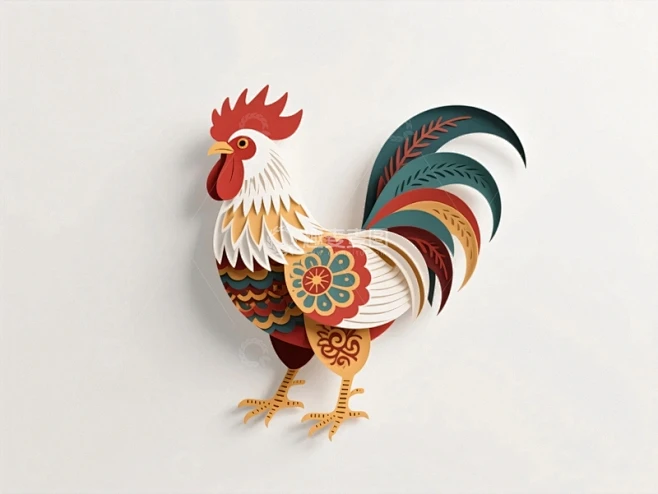
A metal rooster chinese zodiac pattern isn’t about being “difficult.” It’s about protecting a personal code: respect, integrity, and standards that don’t change when it’s inconvenient. You may look calm and polite, but your mind is tracking one question in the background: Is this person real—or just smooth?
Most sites describe Roosters as “confident and outspoken.” True, but incomplete. Metal adds a blade: faster judgment, cleaner boundaries, and a stronger reaction to sloppy behavior. When something feels off, you don’t explode. You tighten. You correct. You go quiet. And people feel the temperature shift.
Scroll down and you’ll recognize the exact pattern that quietly costs you closeness—and the fix that keeps your standards without turning love into a performance review.
Quick Answer — 1981 Metal Rooster (metal rooster year)
1981 metal rooster: Yes.
metal rooster year: 1981.
year of the metal rooster: 1981 (most recent in this cycle).
If you’re a Rooster, the “Metal” flavor often shows as higher standards and faster judgment—especially under stress.
Metal Rooster repeats every 60 years; 1981 is the most recent Metal Rooster year.
Late Jan/early Feb births can shift depending on the calendar boundary used, so confirm by birthday.
metal rooster meaning — what “Metal” adds to the Rooster
Metal doesn’t make you louder. It makes you cleaner. A Metal Rooster is wired to protect what’s solid: clear words, responsible behavior, and respect that holds under pressure. You don’t fear disagreement—you fear vagueness, shifting stories, and “I didn’t mean it like that” after someone crosses a line.
Here’s what most pages miss: you’re not chasing control for its own sake. You’re trying to prevent future chaos. When someone is sloppy, your brain reads it like risk. That’s why you correct quickly. You’d rather fix the crack now than watch the whole wall collapse later.
But intimacy doesn’t grow through constant correction. If your nervous system turns love into quality control, people start hiding the messy truth. They keep things vague to avoid being judged. Then you sense the hiding, and trust drops.
If this is your pattern, these will feel familiar:
- You rewrite a message three times to remove ambiguity.
- “I forgot” hits your respect more than your anger.
- You can sense a lie before you can prove it.
- You notice the one detail everyone else misses—and it changes your decision.
- You fix problems fast, then feel alone doing it.
Breakthrough: keep the standard, switch the tool—replace “correction” with one boundary sentence and one clear option.
metal rooster personality & metal rooster traits
metal rooster personality
You’re not built for “maybe.” You’re built for real. People call you intense because you don’t tolerate blurry lines. But what they’re really seeing is your inner contract: words matter, promises matter, and respect is either protected or it isn’t.
- You notice what’s off immediately, even when you stay polite.
- You don’t hate people—you hate sloppy promises.
- You speak straight because ambiguity feels unsafe.
- You can praise, but you rarely flatter.
- When respect drops, warmth shuts off fast.
- You’d rather walk away than repeat the same conversation.
If this feels accurate, you likely value correctness over comfort—and that’s why vague people drain you fast.
A traditional reading explains the “why.” In BaZi (Four Pillars), Metal Rooster often carries a precision-driven nature (many 1981 births map to a “Xin-You” structure). But two Metal Roosters can look very different depending on the rest of the chart:
- For some, sharpness is a switch they can turn on at work and turn off at home.
- For others, sharpness becomes a defense they can’t switch off—especially in love.
That difference is why personal readings feel unsettlingly accurate: they reveal what specifically triggers your shutdown, and why the same conflict keeps repeating with different people.
metal rooster traits
- Precision pride — details equal integrity, not ego.
- Boundary honor — respect is non-negotiable once earned.
- Sharp honesty — you cut confusion quickly (and people can feel exposed).
- Quiet pressure — you hold yourself to a brutal bar, then expect others to “just know.”
Two-line diagnosis (save this)
You don’t leave because you don’t care—you leave when respect becomes unsafe.
Your biggest upgrade isn’t softer standards—it’s clearer boundaries said once, then enforced calmly.
3-column Life Cards — Love / Work / Money
Love
You don’t fall for charm alone. You fall for consistency. You watch how someone handles truth, responsibility, and respect. When you feel safe, you’re loyal and protective. When you don’t, your warmth becomes conditional—and you might not notice it happening.
The common crash: your corrections become frequent, and your partner starts feeling evaluated. They share less. They hide more. You sense the hiding. Then you go quiet, and the room turns cold.
Real-life signs:
- They say “Nothing’s wrong,” and you can hear it’s not true.
- You stop asking “How was your day?” and start asking “Why didn’t you do what you said?”
- You read a text and feel your chest tighten—because it’s vague again.
Fix (without lowering standards): lead with the feeling, then the request.
“When plans change last-minute, I feel like I don’t matter. I need a clear confirmation by tonight. If not, I’ll make my own plan.”
Work
You’re built for roles where standards matter: delivery, operations, compliance, editing, quality control, audits, process design—anything measurable and verifiable. You don’t just notice problems—you prevent repeats.
The hidden pain: you become the unspoken standard for everyone. You fix everything so fast that people stop learning. Then you feel alone, overworked, and quietly resentful.
Real-life signs:
- You rewrite someone else’s work at midnight “to protect the outcome.”
- You keep saying “It’s fine, I’ll handle it,” then you can’t respect them anymore.
- Meetings feel like you’re watching slow motion mistakes.
Fix: turn standards into checkpoints. Put requirements in writing. Assign owners. Set review dates. Stop carrying the whole system in your head.
Money
You spend on quality to buy peace. You hate waste because waste feels like loss of control. You can be disciplined, but your mind also replays decisions: “Was that worth it? Did I get played? Should I have waited?”
Two common loops:
- You restrict too hard → anxiety rises → you “escape spend” on something premium.
- You only buy “the best” → budget breaks → guilt starts.
Fix: one plan, one safety cushion, one guilt-free category. The goal isn’t saving—it’s mental quiet.
metal rooster compatibility — love & relationship patterns
Relationship pattern: slow trust, fast respect-drop
You don’t rush attachment. You observe first. You watch behavior, not talk. When someone is steady, you become deeply loyal. When someone is slippery, your nervous system treats it as danger—and you get colder, not louder.
Real-life tells:
- You remember the exact promise that was broken—even months later.
- You stop arguing and start reducing access (less sharing, less warmth, less effort).
- You can’t unsee inconsistency once it appears.
- You test with small standards before you risk your heart with big ones.
Best fit vs. challenging fit (interaction style)
Best fit: people who respect boundaries, communicate clearly, and keep their word even when it’s inconvenient. They don’t confuse your standards with cruelty. They meet you with steady behavior.
Challenging fit: people who blur lines, dodge responsibility, or rely on charm to cover gaps. If someone constantly changes the story, you’ll start checking, correcting, or distancing—and they’ll call you “controlling,” even though you’re reacting to instability.
A traditional reading makes this more precise: it can show whether your main love lesson is (1) soften delivery while keeping truth, or (2) stop investing in unstable people who activate your defense. That’s why compatibility can feel “fated”: you keep meeting the same pattern until you change the tool.
Metal Rooster’s biggest relationship trap
Trap 1: Sweet talk, weak follow-through → you become the manager.
You start reminding, correcting, checking. You become the adult. Attraction turns into duty.
Trap 2: You tolerate “almost” too long → then you cut it off suddenly.
You stay polite while respect is dying. Then one day you’re done, and people act shocked.
Trap 3: You use correction to buy safety → intimacy drops.
The relationship becomes clean but cold. You get order, but lose softness.
You’re not too harsh. You’re using control to buy safety. We’ll switch the tool—without lowering your standards.
Ready to see your exact relationship trigger and boundary style?
Green flags and red flags (for Metal Roosters)
Green flags (you relax around these):
- They do what they said they would do—without reminders.
- They can take feedback without twisting your words.
- They apologize with action, not speeches.
Red flags (your shutdown starts here):
- They change the story when confronted.
- They say “I didn’t think it mattered” after breaking a promise.
- They use charm to escape responsibility.
Stress response — your trigger → reaction → result loop
Trigger: disrespect, sloppy behavior, broken promises, public embarrassment, uncertainty.
Reaction: you correct immediately, tighten rules, raise standards, and close emotional access.
Result: high performance and clean outcomes—plus distance, loneliness, and burnout.
If this is you, you’ve lived the same scene in different places: you stay composed, you fix the issue, you look “strong,” and later you feel strangely empty. That’s the loop.
Break the loop (3 steps):
- Name the boundary (one sentence).
- Offer one clear option.
- Stop over-owning what you can’t control.
Boundary sentence template (copy/paste):
Metal Rooster rule: say it once, then act. Repeating the boundary turns you into a lecturer. One statement, one follow-through—your power returns immediately.
Career & money — how Metal Rooster wins (and where it breaks)
Career
You win when the role respects standards: measurable outcomes, clear ownership, real accountability. You’re corrective by nature—you can take a messy system and make it reliable.
Where it breaks: you become the last line of defense. People lean on you because you save outcomes. Then you quietly lose respect for them, your tone sharpens, and work starts feeling like carrying adults.
Upgrade: build a standard others can follow.
- Define “done” in writing.
- Add checkpoints (dates, owners, proof).
- Stop rescuing repeat offenders.
Money
Your strength is disciplined planning and low tolerance for waste. Your weakness is anxiety when things feel untracked.
Upgrade: one buffer, one plan, one rule you can keep. When the system holds, your mind relaxes—and you stop needing control as emotional safety.
Our method — why “Metal Rooster” exists (traditional system)
We work from BaZi (Four Pillars) logic: element patterns show up as reaction loops in real life. We map element → trigger → reaction → result, then give tools that match your nature—so you can change outcomes without becoming someone else.
That’s why the guidance stays consistent across love, work, and money: it’s the same mechanism wearing different clothes. In a personal destiny reading, we pinpoint what activates your loop—and the boundary script that stops repeating the same lesson with different people.
FAQ — Metal Rooster questions
1981 metal rooster — what does it mean?
It means your Rooster nature is colored by Metal: sharper standards, faster judgment, and a strong need for consistency. In a metal rooster year like 1981, many people show a clean-rules mindset—trust rises with steady behavior and falls with repeated inconsistency.
What is the metal rooster year?
The most recent metal rooster year is 1981. Metal Rooster follows a 60-year cycle, so it doesn’t happen every Rooster year. If you were born near late January or early February, confirm your sign by birthday to avoid calendar boundary shifts.
What is the year of the metal rooster?
The year of the metal rooster most recently is 1981.
Metal Rooster repeats every 60 years; 1981 is the most recent Metal Rooster year.
What is metal rooster meaning?
Metal Rooster meaning is precision with a purpose: you protect integrity, order, and respect. Your growth isn’t “lower standards.” It’s learning when correction helps—and when it freezes closeness. Keep the standard, use boundaries instead of constant fixing.
metal rooster personality — why do I feel guarded?
Because inconsistency registers as risk. You don’t relax around shifting stories or unclear commitments. When respect feels unstable, you become more exact and less emotionally available—often without realizing it.
metal rooster traits — what stands out most?
The most obvious metal rooster traits are fast pattern recognition, low tolerance for sloppy promises, and a strong respect code. You can be warm, but warmth depends on integrity. When integrity breaks, your access closes.
metal rooster compatibility — what matches best?
metal rooster compatibility is strongest with people who are consistent, clear, and accountable. The best matches aren’t always the most romantic—they’re the most reliable. The hardest matches are those who blur lines, dodge responsibility, or rely on charm instead of follow-through.
Is this just a stereotype?
If it were, it would feel generic. The real test is whether it predicts what you do under stress: many Metal Roosters don’t get loud—they get colder and more exact. A personal reading goes deeper by showing what triggers your loop and how to change the outcome without changing your nature.
Why do Metal Roosters go cold when hurt?
Because respect is your emotional gateway. When you feel disrespected or lied to, you don’t explode—you conclude. Coldness is your protection mechanism: it prevents repeated harm and stops you from negotiating your boundaries.
Explore more
Ready to see your exact relationship trigger and boundary style?
In a personal destiny reading, we pinpoint what activates your loop—and the boundary script that stops repeating the same lesson with different people.
- Keep the standard, switch the tool
- One boundary sentence, one clear option
- Say it once, then act