
Feng Shui Bagua Map
If you've spent any time reading about feng shui online, you've seen the Bagua map. It's the octagonal grid with colorful slices labeled "Wealth," "Fame," "Love," "Career." And if you're like most people, you've looked at it and felt two things simultaneously: this looks important, and I have no idea how to actually apply it to my real, not-perfectly-rectangular house. You're right on both counts. The feng shui bagua map is important — it is the primary tool for mapping life are
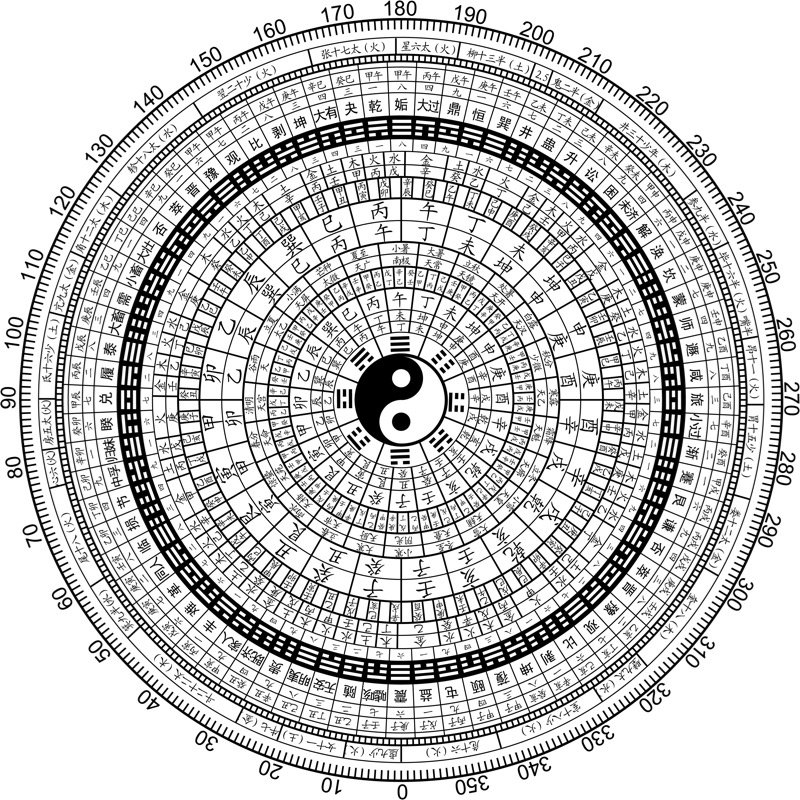
What the Bagua Map Actually Is
The feng shui bagua \(八卦, literally \"eight symbols\"\) is not a decorating chart. It is a spatial classification system, and every bagua feng shui map reading must account for the actual structure of the house. It is a spatial classification system that assigns eight life areas plus a center to the eight cardinal directions plus the center. Each sector — called a gua (卦) — has a name, a direction, an element, a number, a family member association, a body part association, and a life area. The full bagua feng shui map is a rich classification system that goes far beyond "this corner is for wealth."
The eight sectors of the bagua map: Zhen (震, East, Wood, Family/Health), Xun (巽, Southeast, Wood, Wealth), Li (离, South, Fire, Fame/Recognition), Kun (坤, Southwest, Earth, Relationships/Partnership), Dui (兑, West, Metal, Children/Creativity), Qian (乾, Northwest, Metal, Helpful People/Travel), Kan (坎, North, Water, Career/Life Path), Gen (艮, Northeast, Earth, Knowledge/Self-Cultivation). The center is the Tai Chi (太极), the unifying point where all sectors meet.
In feng shui bagua directions application, each sector of your house corresponds to one of these eight life areas. This does not mean "decorate this room and the corresponding life area improves." It means: the energy quality of this room affects the corresponding life area because this room occupies that sector of the spatial system you live in. The relationship is structural, not symbolic.
How to Align the Bagua to Your Floor Plan
This is the step where most feng shui bagua map guides lose people. The alignment method depends on which classical system you follow — and knowing which to use prevents the most common application errors.
For the classical feng shui bagua map with directions: stand at the front door facing out and take a compass reading. Your feng shui bagua directions are then overlaid by compass, not by front door alignment. stand at the front door facing out. Take a compass reading. This is your house's facing direction. The Bagua is oriented to compass directions, not to the front door wall. North on the Bagua aligns with magnetic north on your floor plan. This is the method used in Flying Star and Eight Mansions systems, and it means the sector assignments are based on actual compass directions, not on the shape of the house.
For the simplified (BTB/Black Sect) method: align the bottom edge of the Bagua (Knowledge/Career/Helpful People) with the wall containing the front door. The Bagua stretches to cover the entire floor plan. This method is simpler because it doesn't require a compass, but it loses the direction-specific information that classical systems rely on.
The professional feng shui bagua map compass directions approach uses the classical compass method because it integrates with the Flying Star chart — the time-sensitive energy layer that tells you not just which life area a sector governs, but what energy quality (star combination) is currently active there. The simplified method is useful for preliminary orientation but should not be the final word for rooms where you spend significant time.
Reading Each Sector: Beyond "Put This Object Here"
Once the feng shui bagua is aligned to your floor plan, each room is evaluated within its sector context. A bedroom in the southwest (Kun, Earth, Relationships) is not automatically good or bad — it depends on what's happening in that room. But knowing the sector tells you what's at stake: the bedroom in the relationships sector means sleep quality, bedroom layout, and the feel of that room affect the relationship life area more than if the same bedroom were in the north.
The same principle applies across a bagua feng shui map reading. A home office in the north (Kan, Water, Career) means your work setup directly affects your career energy. A kitchen in the northwest (Qian, Metal, Helpful People) means the fire of the kitchen is melting the Metal of the helpful-people sector — a structural fire-metal clash that should be addressed at the layout level before any decorative fixes.
The center — Tai Chi — governs overall health and balance. In feng shui bagua directions, the center's condition affects every sector because the center distributes qi to all eight directions. A clear, open, well-lit center supports all life areas. A center blocked by a staircase, a bathroom, or a storage closet weakens every sector's energy quality.
The Bagua and the Five Elements
Each feng shui bagua map sector is associated with one of the Five Elements, and the element cycle determines how sectors interact. The east and southeast are Wood. The south is Fire. The southwest and northeast are Earth. The west and northwest are Metal. The north is Water. The center is Earth.
These element assignments matter because rooms in a sector are affected by the sector's element. A bedroom in the south (Fire) should avoid strong Water elements (black decor, water features, mirrors) because Water extinguishes Fire — placing Water in a Fire sector weakens the sector's energy and creates element conflict. A study in the northeast (Earth, Knowledge) benefits from Fire elements (warm lighting, red accents) because Fire produces Earth in the productive cycle.
The feng shui bagua directions element framework is not about rigid rules — it's about understanding which additions support or weaken a sector's natural element, and adjusting accordingly based on what the room actually needs.
FAQ
The compass method (classical) is more accurate and integrates with Flying Star. Use it if you can take a compass reading. The front-door method (BTB/simplified) is better than nothing and works for preliminary orientation. If you're making significant layout decisions — especially for bedrooms and home offices — use the compass-based feng shui bagua map compass directions method for precision.
For irregular shapes with the compass method, extend the Bagua grid over the full rectangular footprint that the house would occupy if complete. The sectors that fall outside the actual floor plan are missing. For L-shaped houses, identify whether the missing portion is a true missing sector or a projecting sector. Missing sectors require compensation in adjacent sectors; projecting sectors are an extension of their gua.
Yes. When two rooms share a sector, both affect the corresponding life area. The room where you spend more time has greater influence. In a feng shui bagua reading, rooms are evaluated individually within the sector but the combined energy of both rooms contributes to the sector's overall effect.
Aligning the Bagua, seeing "Wealth" in the southeast, and immediately putting a money plant there without evaluating what's actually in that sector. If the southeast is a bathroom, no amount of plants will override the drainage function. The Bagua reveals the structural condition — good or challenging. It is not a remedy prescription.
Next Step
The Bagua map provides the framework. A professional assessment adds the Flying Star layer, the personal Kua directions, and the external environment — turning the map from a general reference into a specific guide for your house and your household.
Book a Home Feng Shui Consultation*A professional consultation aligns the Bagua to your floor plan using precise compass measurements, overlays the Flying Star chart, and provides sector-by-sector recommendations based on your complete house chart.*
Get a professional assessment that applies these principles to your specific space — not generic advice.
A Home Feng Shui Consultation evaluates your home's structure, orientation, Bagua overlay, and room-by-room energy distribution. Specific recommendations based on your actual floor plan.
- Complete floor plan analysis with Bagua overlay and Flying Star chart
- Room-by-room recommendations based on compass sectors and personal Kua directions
- Structural, furniture, element, and annual adjustment plan — all four layers