
Feng Shui Colors
Walk into a room painted deep red. Notice what happens in your body — heart rate, alertness, a subtle sense of heat. Now walk into a room painted soft sage green. Different body. Different pace. Different feeling. You didn't need anyone to tell you the theory — your nervous system already knows what feng shui colors describe: that color is environmental input processed continuously by your nervous system. The feng shui of colors principle is straightforward — ea
The Five Element Color System
Every color in feng shui colors meaning maps to one of the Five Elements. Understanding feng shui colors and elements is the difference between knowing red is Fire and knowing a red wall in a Metal room weakens the sector. to one of the Five Elements, and the element determines which rooms and sectors the color supports or conflicts with.
Fire colors: red, bright orange, hot pink, burgundy, crimson. Fire is active, yang, attention-grabbing. Use in: south sector (where Fire is native), living rooms (to activate social energy), dining rooms (Fire supports appetite and conversation). Avoid in: bedrooms (too yang for sleep), north sector (Water vs. Fire clash), northwest sector (Fire melts Metal). In feng shui colors and elements, Fire is the most powerful and the most likely to be overused — a red accent wall goes a long way.
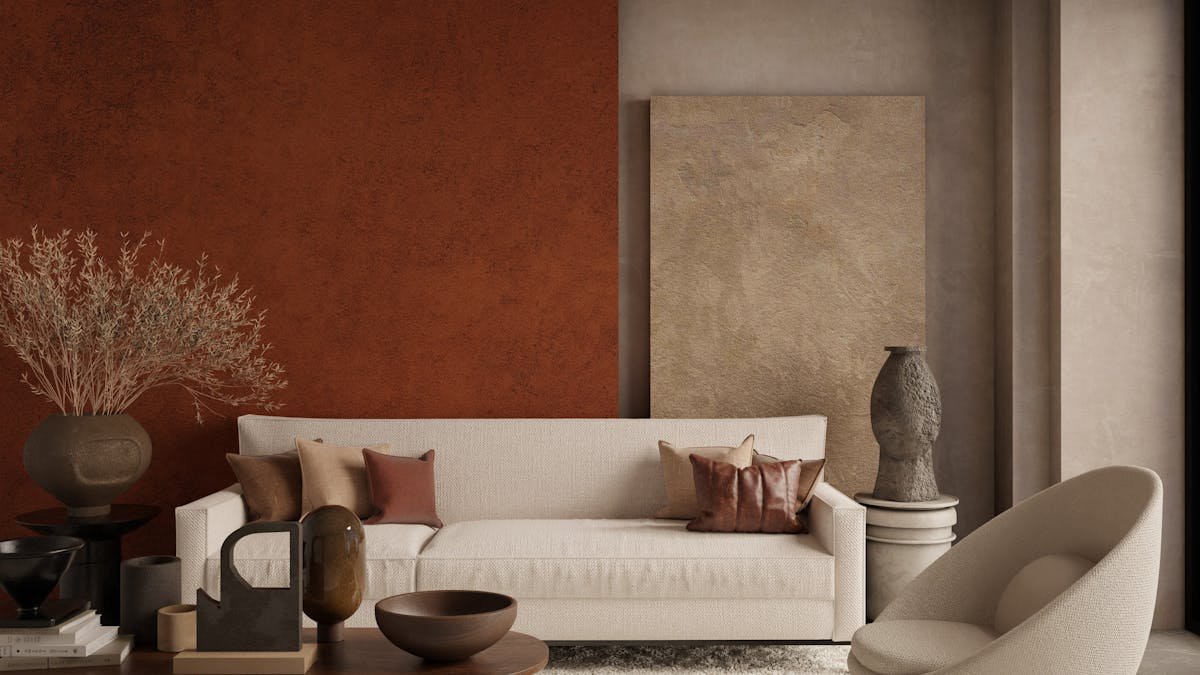
Earth colors: warm beige, terracotta, sand, light yellow, ochre. Earth is stable, grounding, nurturing. Use in: southwest and northeast sectors (Earth is native), bedrooms (earth tones support restfulness), the center of the home (Earth governs the tai chi). Earth is the safest element for cross-sector use — it mediates between Water and Fire, supports Metal and Wood. Feng shui earth colors are the most versatile in the palette.
Metal colors: white, cream, gray, silver, metallic tones. Metal is precise, clear, structured. Use in: west and northwest sectors (Metal is native), home offices (Metal supports focus and precision), entryways (clarity at the mouth of qi). Avoid in: east and southeast sectors (Metal chops Wood). Feng shui earth element colors (beige, sand) support Metal in the productive cycle.
Water colors: navy blue, dark blue, black, deep charcoal. Water is introspective, fluid, career-related. Use in: north sector (Water is native), bathrooms (Water in a wet room is harmonious), meditation spaces. Avoid in: south sector (Water extinguishes Fire), bedroom overuse (too much Water makes a room feel cold and emotionally distant). In feng shui colors for bedroom, dark blue is a specific accent, not the wall color.
Wood colors: green, teal, olive, sage, forest green. Wood is growth, expansion, new beginnings, family. Use in: east and southeast sectors (Wood is native), children's rooms (Wood supports growth), home offices for creative work. Avoid in: west and northwest sectors (Wood is chopped by Metal, but the room's function usually takes priority).
Room-by-Room Color Guide
Feng Shui Bedroom Colors. The bedroom is a yin space — it needs colors that support rest, not activate wakefulness. The safest feng shui for bedroom colors: warm earth tones (beige, taupe, sand). For feng shui bedroom colors, the wall behind the headboard is the most important surface — it should be the most grounding color in the room. warm earth tones (beige, taupe, sand), soft warm whites, pale peach, light sage. These are yin in quality — calming, not stimulating. Avoid: bright red (too yang), dark blue in large areas (too cold), pure white (too sterile — use warm white instead). In feng shui colors for bedroom, the wall behind the headboard is the most important surface — it should be the most grounding color in the room.
Feng Shui Kitchen Colors. The kitchen is Fire territory (stove) with Water elements (sink). The safest feng shui colors for kitchens: warm whites, cream, light yellow, soft green. These support both the Fire function (through warmth) and contain it (through Earth/ Wood moderation). Avoid: too much red (double Fire — the stove already provides Fire), too much black or dark blue (Water extinguishes stove Fire), too much metallic gray (Metal is melted by kitchen Fire).
Feng Shui Bathroom Colors. The bathroom is a Water-dominant drainage zone. The safest colors: warm earth tones (beige, sand, light terracotta), which absorb excess Water. Avoid: dark blue or black (double Water in a drainage zone), deep red (Fire-Water clash in a wet room). In feng shui colors to avoid for bathrooms, black tiles are the most common error — they amplify the drainage effect of an already draining room.
Living Room Colors. The living room is the household's yang gathering space. Color flexibility is highest here. The sector determines the base palette: earth tones for southwest/northeast/center, warm colors for south, greens for east/southeast, whites/grays for west/northwest, blues for north. A neutral base with sector-appropriate accent colors is the most flexible and livable approach.
FAQ
Warm earth tones — beige, sand, taupe, warm white — are the safest and most supportive for sleep. The specific best color depends on the bedroom's compass sector. A north-sector bedroom can support slightly more Water colors than a south-sector bedroom. The universal rule: the bedroom color should feel calming to you personally, regardless of what color charts say. Your nervous system is the final judge of any feng shui bedroom colors choice.
Avoid large areas of deep red in bedrooms (too yang), pure black in bathrooms (amplifies drainage), and any color you personally dislike in a room where you spend significant time. Color preference matters — a feng shui of colors recommendation that you hate is worse than a slightly suboptimal color you love, because your negative reaction to the color overrides its element benefit.
Yes. An accent wall carries the element energy of its color, just at a lower intensity than four walls. A red accent wall in the south (Fire sector) is supportive. A red accent wall in the north (Water sector) is still a Fire-Water clash — just a smaller one. In feng shui colors and elements, proportion matters: the larger the colored surface, the stronger the element effect.
Yes — in fact, you should. Each room has a different function and may be in a different compass sector. Uniform whole-house color is the least feng shui-aligned approach. Each room's feng shui colors meaning should respond to its function, its sector, and the people who use it most.
Next Step
Color is the finishing layer of feng shui — effective when the structure is sound, decorative when it's not. A professional assessment evaluates your home's structure first, then recommends colors that work with — not against — each room's sector and function.
Book a Home Feng Shui Consultation*A consultation provides room-by-room color recommendations based on compass sectors, room functions, and Five Element balance — not on generic "lucky color" lists.*
Get a professional assessment that applies these principles to your specific space — not generic advice.
A Home Feng Shui Consultation evaluates your home's structure, orientation, Bagua overlay, and room-by-room energy distribution. Specific recommendations based on your actual floor plan.
- Complete floor plan analysis with Bagua overlay and Flying Star chart
- Room-by-room recommendations based on compass sectors and personal Kua directions
- Structural, furniture, element, and annual adjustment plan — all four layers