Feng Shui Kitchen
The kitchen is the only room in the house where two opposing elements — fire and water — must coexist in close quarters. No other room has this structural tension built into its very function. Getting a feng shui kitchen right means understanding the stove-sink-refrigerator relationship before cabinet colors — because in kitchen feng shui, structure determines everything else.
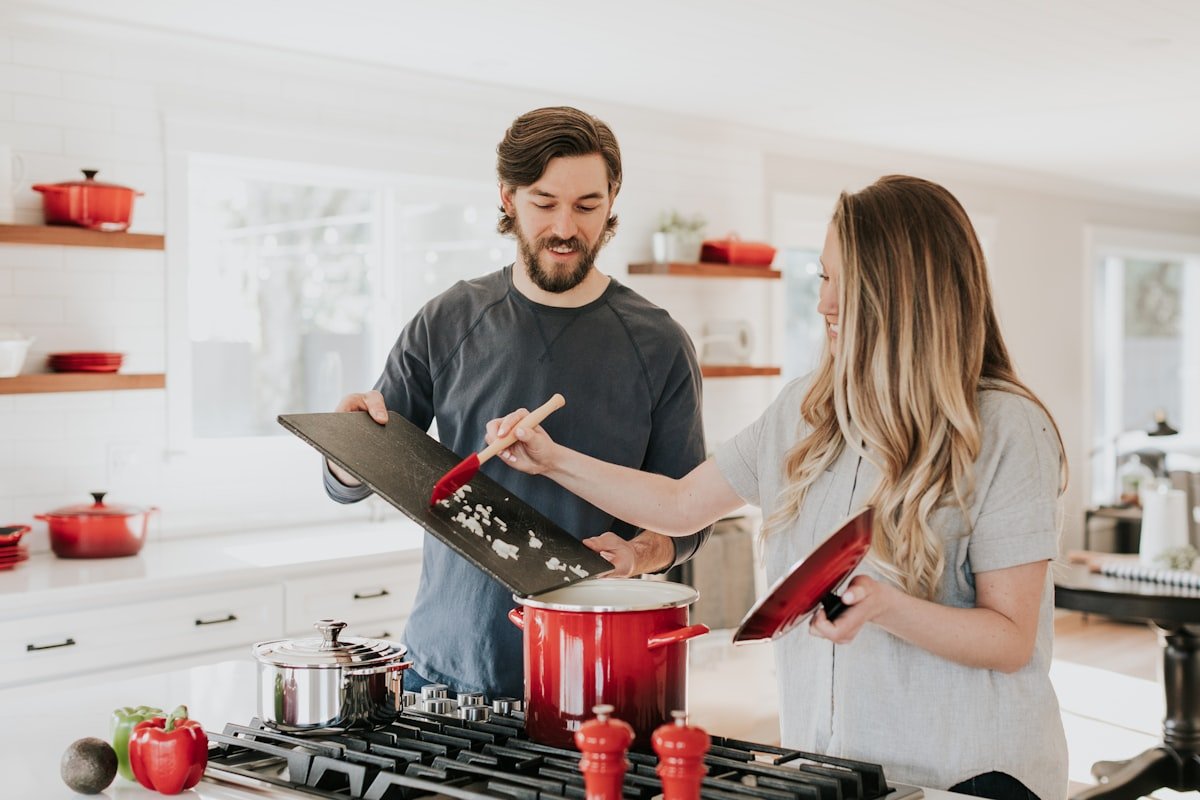
Of All Rooms in the House, the Kitchen Has a Structural Tension No Other Room Has
In classical feng shui, the kitchen governs the household's health and nourishment at a structural level. The stove position — and its relationship to water sources, doors, and windows — affects every person who eats food prepared there. A correctly arranged feng shui kitchen layout supports the people who use it. An incorrectly arranged one quietly works against them every time a meal is cooked.
Most articles about kitchen feng shui begin with colors and end with a fruit bowl recommendation. This one won't. The practical reality is that the stove, the sink, and the refrigerator are the three objects that matter most in any feng shui kitchen — and everything else is secondary. If those three are correctly positioned relative to each other and the room's openings, the kitchen functions. If they are not, no amount of red paint or lucky bamboo compensates.
Quick check: if you relate to 2+ of these, your kitchen's elemental balance needs attention.
- Your stove and sink are on the same counter, directly next to each other.
- Your stove faces the sink or refrigerator directly across the room.
- You feel restless or drained after cooking — without knowing why.
The Fire-Water Conflict: Three Configurations That Matter
In the Five Element cycle, water controls fire — it extinguishes it. When a sink (water) is directly next to or directly opposite the stove (fire), the elemental relationship is one of suppression. In a feng shui kitchen, this is called the "fire-water clash" (水火相冲), and it is the single most common structural problem in modern kitchens.
Sink and stove on the same counter, directly adjacent. Standard in apartment kitchens where counter space is limited. Every time water runs while the stove is in use, the elemental conflict activates. Fix: place a wooden cutting board or potted herb between them — Wood sits between Water and Fire, absorbing the conflict.
Sink and stove on opposite counters, facing each other. The cook stands between them, positioned in the middle of an elemental standoff. This is a feng shui kitchen layout error that requires a partition or screen on the counter between them.
The refrigerator is a Metal-Water object — metal housing containing cold storage. When it faces the stove directly, the same elemental conflict occurs, but the refrigerator is larger and runs 24 hours a day. In feng shui of kitchen, stove, sink, and refrigerator should form a triangle, not a line.
In a properly functioning feng shui kitchen, Fire and Water should never face each other without an element between them. Colors, materials, and decor are secondary — the elemental relationship between the three major objects determines whether the kitchen supports or quietly works against the household.
Stove Position: The Health Anchor of the House
In classical feng shui, the stove (灶) is considered the primary health anchor of the home. It is where food — the most direct form of nourishment — is transformed from raw ingredients into meals. The feng shui kitchen stove position carries more weight than any other fixture in the room. A stove meeting these four conditions supports the household's health. A stove violating two or more should be the first thing addressed.
Against a Solid Wall, Facing Into the Room
The cook should face into the room while cooking — not face a wall. This is the command position applied to kitchen work. In feng shui for the kitchen, a cook facing a wall while working is a priority fix. A mirror on the wall behind the stove is a partial remedy.
Not Visible From the Front Door
If the stove is directly visible from the front door, fire energy dissipates outward. In a feng shui kitchen, the stove should be set back so it is not the first thing seen upon entering. A screen or tall plant between door and kitchen serves as a remedy.
Not Under a Window
Wind extinguishes fire and qi escapes through glass. A stove directly under a window lacks the solid backing that a feng shui kitchen requires for its health anchor. If unavoidable, close blinds during cooking and keep a wooden board behind the stove.
Not Against a Bathroom Wall
A stove against a wall shared with a bathroom means water drains fire energy through the wall. This is one of the most damaging feng shui kitchen layout configurations. If unavoidable, a solid wood panel between stove and wall helps absorb the conflict.
Kitchen Layouts That Work — and Ones That Don't
Different kitchen shapes create different elemental relationships. Here is how the four most common layouts perform in a feng shui kitchen assessment — and what to do about each one.
An L-shape with stove and sink on different arms, and the cook facing into the room, is functionally close to ideal in feng shui of kitchen terms.
Kitchen Colors: The Element Rule, Not the Trend Rule
Color advice for a feng shui kitchen that says "use red for energy" or "avoid blue because water extinguishes fire" misses the point entirely. Color choice depends on where the kitchen is located within the home's Bagua map — the sector determines the governing element, which determines which colors support or suppress.
If the kitchen is in the south sector (Fire), warm whites and earth tones are generally harmonious. If in the east (Wood), greens and blues work well. If in the north (Water), the kitchen's inherent Fire energy and the sector's Water energy are already in conflict — neutral earth tones that mediate between Water and Fire are the safest choice for feng shui kitchen colors.
The one color rule that applies universally: avoid large expanses of red. The kitchen already contains fire energy from the stove. Adding red walls or cabinetry doubles the fire element, creating an overheated room that agitates rather than nourishes. A small red accent — a kettle, a single tile detail — is fine. A red-dominated feng shui kitchen is not. The same applies to black and deep blue, which introduce excessive Water energy that suppresses the kitchen's Fire function.
Common Questions About Feng Shui Kitchen
The stove-sink relationship. If they are adjacent or facing each other, address that before changing anything else. A wooden element between them is the simplest first step. In feng shui kitchen work, structural issues always come before colors and decor.
It presents challenges but is not inherently bad. The key is defining the boundary between the cooking zone and the living zone — a kitchen island, a change in flooring material, or a deliberate visual divider. Without a boundary, the feng shui kitchen fire energy disperses into living spaces and creates restlessness.
The cook should face into the room while cooking — not face a wall. This is the command position applied to kitchen work. If the stove is positioned so the cook faces a wall, this is a priority fix in any feng shui for the kitchen assessment.
A kitchen directly visible from the front door is unfavorable. Qi enters and immediately encounters fire energy, which disperses it. In feng shui kitchen placement, the kitchen should be set back from the entrance. A screen, curtain, or tall plant between door and kitchen helps.
It depends on the kitchen's compass sector and natural light. Generally, warm neutrals, soft earth tones, and muted greens are safe across most configurations. Avoid large expanses of red and black/deep blue. Specific feng shui kitchen colors recommendations require knowing the room's Bagua sector.
In classical feng shui, yes — the kitchen is considered the household's health anchor because it is where food is prepared. A well-positioned stove supports nourishment. A poorly positioned one may correlate with health instability patterns. This is why feng shui kitchen assessments prioritize the stove above all else.
A kitchen's function depends on its structure. A full assessment identifies what individual tips cannot see.
A Home Feng Shui Consultation examines the kitchen within the context of the entire floor plan — because the kitchen's energy does not stay in the kitchen. Every kitchen is different, and a consultation considers stove position, fire-water relationships, and the kitchen's place in your home's Bagua map.
- Stove position assessment — the health anchor of your home
- Fire-Water balance analysis — sink, stove, and refrigerator placement
- Full Bagua map — the kitchen's role in your home's energy system