Feng Shui Products
Walk through any shop selling feng shui products and you'll see: crystals in every color, Bagua mirrors in multiple sizes, laughing Buddha statues, wind chimes, Chinese coins tied with red string, bamboo plants in ceramic pots, water fountains with rotating spheres, bracelets strung with black obsidian or citrine, and small figurines of every animal in the Chinese zodiac. The selection is overwhelming. The claims on the packaging are confident. And nowhere in the shop is there a sign that says:
Plant Products
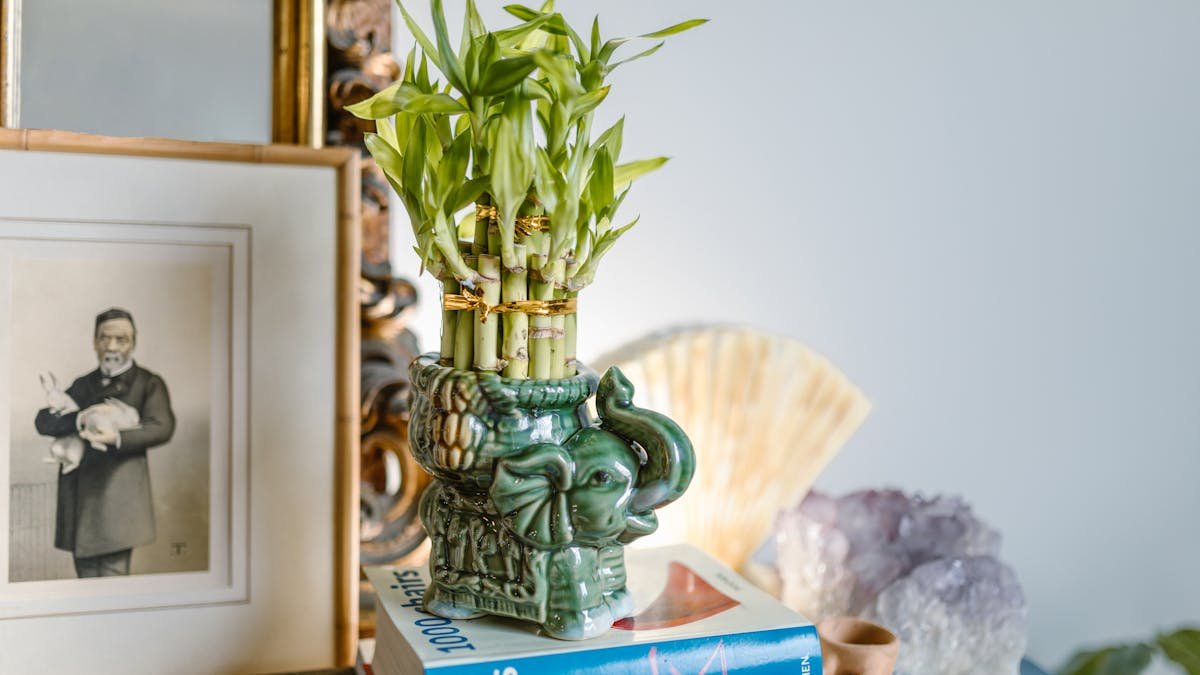
Lucky Bamboo (富贵竹, Fu Gui Zhu). The most popular Lucky Bamboo. The most popular feng shui plants item. In any feng shui products collection, living plants are the highest-value additions. Bamboo in feng shui represents resilience, upward growth, and flexibility. The number of stalks carries meaning: 2 for love, 3 for happiness, 5 for health, 8 for prosperity, 9 for general good fortune. Lucky bamboo is a Wood element addition — it supports east and southeast sectors (Wood is native) and south sectors (Wood produces Fire). Place in a visible, well-lit area. In a feng shui money tree context, lucky bamboo in the wealth sector (southeast) adds living Wood energy to the sector governing accumulation.
Money Tree (发财树, Fa Cai Shu). The Pachira aquatica, often sold with braided trunks. The five leaves per stem represent the Five Elements. A Wood element addition that supports wealth-sector energy when placed in the southeast. The lucky bamboo feng shui and money tree share the same principle: living plants add active Wood energy, which is more potent than a decorative object because the plant is alive — it grows, changes, and participates in the room's energy dynamically.
General Plant Guidelines. Any healthy plant adds Wood element energy. Any dead or dying plant adds stagnant Wood — worse than no plant. Place plants in sectors that benefit from Wood (east, southeast, south) and in rooms that support living things (living rooms, kitchens, studies). Avoid plants in bedrooms (yang, active energy in a yin space) unless they are small and well-contained. Avoid plants in bathrooms (Wood is drained by Water in a drainage zone). The feng shui plants principle: a plant is an element addition, not a universal decoration.
Crystal and Stone Products
Feng Shui Crystals. Feng Shui Crystals. Crystals are Earth element additions. When selecting feng shui crystals as feng shui products, placement should follow element analysis — a crystal in the southwest, northeast, or center adds Earth where Earth is native.. They add grounding, stabilizing energy. Placing a feng shui crystals item in the southwest, northeast, or center sector adds Earth where Earth is native — productive and supportive. Placing a crystal in the north (Water) sector is Earth absorbing Water in the controlling cycle — potentially draining career energy. Crystal placement should follow element analysis, not generic "crystals are good energy" advice. Specific crystals (rose quartz for relationships, citrine for abundance, amethyst for calm) add a layer of intention — the color and association matter alongside the element function.
Stone and Mineral Objects. Any stone object — a stone sculpture, a marble surface, a terracotta pot — carries Earth element energy. The feng shui items category of stones and minerals is broad and includes practical objects (ceramic vases, clay pots, stone coasters) that serve both functional and element purposes.
Water Feature Products
Water Fountains. A feng shui water fountain is a Water element addition located in a specific sector. Water supports the north (career sector — native element), east, and southeast (Water produces Wood). A fountain in the north supports career energy. A fountain in the southeast supports wealth energy (Water produces Wood, and the southeast is Wood element). Avoid fountains in the south (Water extinguishes Fire — career/reputation clash), the bedroom (too active for a yin space), and the bathroom (double Water in a drainage zone).
Wind Chimes. Feng shui wind chimes serve two functions. Metal wind chimes are the standard remedy for Flying Stars 2 and 5 — placed in the sector where these stars reside for the current year. Wood or bamboo wind chimes add Wood element and gentle sound activation — place in east or southeast sectors. The sound of a wind chime activates qi — it's an auditory element addition. Place where the sound is pleasant and infrequent; constant loud chiming in wind is disruptive energy.
Aquariums and Fish. A feng shui aquarium is a significant Water element addition — water plus living creatures. Traditional guidelines: place in the north (career), east (Wood benefits from Water), or southeast (wealth through Water-producing-Wood). The number of fish matters in traditional practice: 8 goldfish + 1 black fish (for protection/absorption) is a common arrangement. An aquarium is a major element commitment — ensure the sector supports Water before installation. A leaking, dirty, or neglected aquarium is worse than no aquarium.
Wearable Products
Feng Shui Bracelets. Feng shui bracelet items Feng Shui Bracelets. Feng shui bracelet items are personal intention pieces. Among all feng shui items, bracelets affect the wearer through proximity and daily visual reminder — they are the most personal of all feng shui products. are typically made from specific stones or woods associated with element properties or cultural beliefs. Black obsidian is worn for protection (Water element, absorbs negative energy in traditional belief). Citrine for abundance (Earth element with Fire-like color). Jade for health and protection (traditionally significant in Chinese culture, associated with Earth and Wood aspects). A bracelet is a personal intention item — it affects the wearer through proximity and reminder rather than through spatial feng shui. The primary feng shui benefit of a bracelet is the daily visual reminder of your intention.
Feng Shui Wallet Color. The feng shui wallet color concept: wallet color affects wealth energy because the wallet holds money. Black/dark blue (Water) is traditionally associated with wealth flow. Red (Fire) is considered by some to "burn" through money — though red is also the color of prosperity in Chinese culture. Green (Wood) supports growth. The wallet color is a minor personal feng shui element — it affects your mindset more than your finances.
Symbolic and Cultural Products
Feng Shui Coins. Chinese coins tied with red string — typically three coins — are placed in wealth sectors, cash registers, wallets, or near financial documents. They are feng shui coins symbols of prosperity, not element cures. Their function is primarily symbolic and intentional — the visual reminder of financial attention.
Feng Shui Charms and Symbols. The feng shui charms category includes a vast range of symbolic objects — Pi Yao (辟邪, mythical protector), laughing Buddha, Fu Dogs (guardian lions), dragon turtle, three-legged toad, and dozens more. These are cultural symbols, not element tools. They function through cultural meaning and personal intention: seeing a Pi Yao near your front door reminds you of protection every time you enter. They do not change the room's energy through spatial mechanism the way furniture placement or element adjustment does.
Feng Shui Wealth Bowl. A bowl filled with symbolic wealth items — coins, crystals, semi-precious stones, gold-colored objects. Placed in the wealth sector (southeast) as an intention anchor. The feng shui wealth bowl is an Earth element (bowl = ceramic/stone) containing mixed-element contents. Its feng shui function is primarily intentional — a focal point for financial attention in the wealth sector.
Before You Buy Any Feng Shui Product
The single most important principle in feng shui products selection: address structure first. A wealth bowl in the southeast adds a beneficial layer if the southeast is structurally sound — it's a bedroom, a living room, a study, a functional and active room. The same wealth bowl in a southeast bathroom adds an intentional layer to a structurally draining sector — the intention says "prosperity" while the structure says "drainage." The structure always wins.
Before buying any feng shui shop item, check the structural fundamentals. Before buying any feng shui products item, check the structural fundamentals. Among all feng shui items, the highest-value ones are those placed with purpose in a sector that supports their element. Everything else is decoration. is the front door clear and opening fully? Is the center of the house open and clear? Is the bed in command position? Is the desk facing a favorable direction? These structural checks, which cost nothing, determine whether a feng shui product will add a layer or just add clutter. A structurally sound space with no feng shui products functions better than a structurally compromised space full of them.
The best feng shui products are those placed with purpose in a structurally sound space. Among all feng shui items, living feng shui plants are the highest-value additions because they participate in the room's energy dynamically. Feng shui crystals add Earth element where Earth is native — southwest, northeast, or center. A feng shui bracelet serves as a daily intention reminder. Before purchasing any feng shui products, verify that your home's structural fundamentals — front door, center, bed position — are already in order. A professional assessment ensures your feng shui items support rather than distract.
FAQ
The ones that serve a clear element function. A metal wind chime for annual Stars 2 and 5 (element mechanism). A healthy plant in the southeast (living Wood in the wealth sector). A ceramic object in the center (Earth in the Earth sector). Products work when they add the right element to the right sector for the right reason. Products that promise results without specifying the element mechanism are decorative until proven otherwise.
A healthy plant for the southeast or east sector. It's alive, it adds active Wood energy, it's visually pleasant, and it costs very little compared to specialty feng shui items. More than any crystal or charm, a thriving plant visibly demonstrates that a sector's energy is active and growing.
Yes. Visual clutter is stagnant qi. If your surfaces are covered with crystals, coins, charms, and figurines — the products are creating the problem they were bought to solve. A few purposeful items in deliberate positions are more effective than a collection.
No. A ceramic bowl from any home goods store is an Earth element addition. A green plant from any nursery is a Wood element addition. A metal object from any source is a Metal element addition. The feng shui products industry is a retail channel; the feng shui principles are universal. The source of the object doesn't determine its element effect.
Next Step
Feng shui products are the finishing layer. A professional assessment ensures the structural foundation is sound before decorative objects are introduced — so every product placed in your space supports rather than distracts.
[Book a Home Feng Shui Consultation →](https://fengshuione.com/home-feng-shui-consultation/)
*A consultation evaluates your home's structure first, then recommends specific element additions and placements based on your house's unique chart — not on a one-size-fits-all product list.*
Get a professional assessment that applies these principles to your specific space — not generic advice.
A Home Feng Shui Consultation evaluates your home's structure, orientation, Bagua overlay, and room-by-room energy distribution. Specific recommendations based on your actual floor plan.
- Complete floor plan analysis with Bagua overlay and Flying Star chart
- Room-by-room recommendations based on compass sectors and personal Kua directions
- Structural, furniture, element, and annual adjustment plan — all four layers